|
Quick Answer: Set up a clear FOGO waste system by giving food organics one consistent green identity across your site, placing a green bin beside every general waste bin, and using containers that empty and move fast enough to keep up with a shift. Map your waste zones and size each bin to its spot. Label every stream, and check the green bin often in the first weeks while habits form. |
FOGO is now live, and the first wave of NSW food businesses is already operating under it. The rush to get ready is over. The real work now is running a FOGO waste system that makes food organics separation happen on its own, shift after shift. A clear waste separation system is one your team and your visitors can read at a glance. This guide shows how to build that clarity into every bin, without slowing anyone down. The staged dates and thresholds are covered in the NSW rollout dates.
A stream is clear when people use it right the first time, without stopping to think.
Food organics needs one look and one position across the whole site, so staff never relearn it.
A green bin on its own gets ignored. Pair it with general waste everywhere.
Overflowing or awkward bins are a top reason food lands in the wrong stream.
Clarity fades after go-live, so spot-check the green stream while habits set.
Clear streams start with a team that knows what belongs where. FOGO covers food and garden organics collected together. Both food scraps and green garden waste go in the same lime green lid bin.
|
Goes in the FOGO bin |
Stays out of the FOGO bin |
|
Fruit and vegetable scraps, peelings and off-cuts |
Plastic, including bags and packaging |
|
Meat, seafood, bones and dairy scraps |
Glass, metal and other recycling |
|
Bread, rice, pasta and other food waste |
General waste and soft plastics |
|
Coffee grounds, tea leaves and tea bags |
Compostable liners that are not certified |
|
Grass clippings, weeds and small prunings |
Large branches beyond your service limit |
|
Wood trimmings, small branches and other garden waste |
Liquids and oils |
Confirm the accepted list with your collector, since a composting facility sets its own rules.
A clear FOGO waste system puts the right bin within reach and makes it obvious. When the bin is hard to find or hard to use, food organics drift into general waste and the load stops being clean.
Less contamination. A clean organics bin keeps your load off the reject pile and out of landfill.
Faster staff decisions. An obvious green bin removes the guesswork during a busy service.
Smoother collections. A stream your collector trusts keeps your collection schedule running without disputes.
Lower cost. Diverting organic waste from general waste trims what you send to landfill.
A cleaner record. Businesses that sort well support the state government goal of cutting organic waste and greenhouse gas emissions.
For the wider system around those bins, see our guide to smarter waste management systems.
Use these six steps to build a waste separation system that holds up across every zone, shift and team.
Walk your site and mark every point where food waste is generated. Prep benches, cook lines and dishwashing stations are obvious ones. Food courts, cafeterias and staff kitchens all produce organics too, at different rates. A quick map tells you how many FOGO bins you need and where they earn their place.
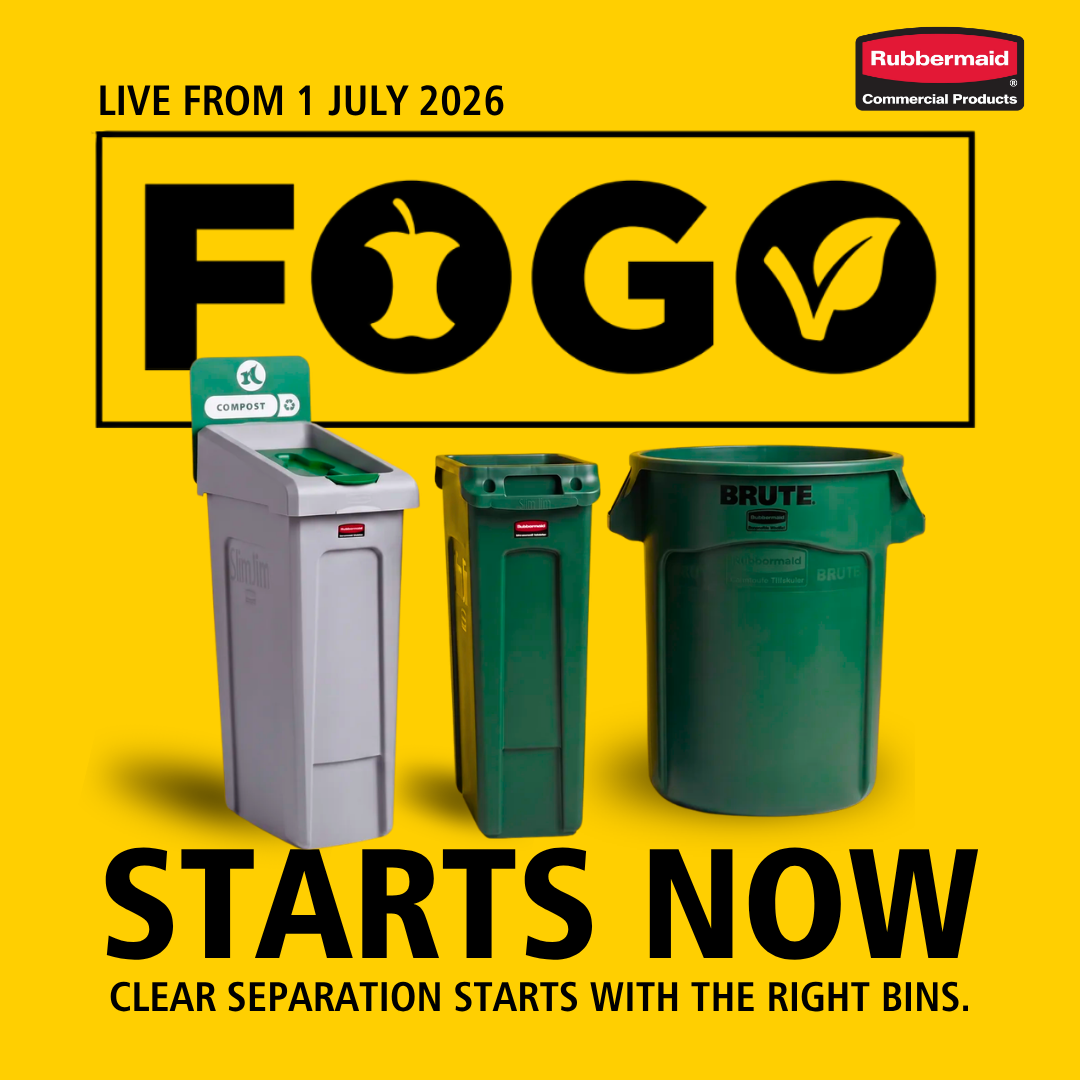
Every stream needs a home your team recognises instantly. For food organics, that means a lime green lid, and it means a bin that looks and opens differently to the rest. Our Slim Jim® bins make this easy. Build a station with only the streams you need. Finish it with green lids and clear labels so the food bin stands out from a distance.
A food organics bin on its own does not work. If the nearest bin is general waste, food scraps go in general waste. So pair them. Wherever a general waste bin sits, put a green bin right beside it. This one habit does more for clean streams than any sign. A vented Slim Jim® 87L in green slots neatly beside an existing bin without eating floor space. For kitchen and food court setups, see our commercial foodservice operations range.
A clear stream fails if the bin cannot keep up. Size each spot to the volume it produces, using the guide below.
|
Zone |
Recommended bin |
Why it fits |
|
Prep bench or serving counter |
Vented Slim Jim® 87L, green |
Slim profile fits tight spaces at the point of disposal |
|
Dishwashing area |
Vented Slim Jim® 87L, green |
Captures plate scrapings before they hit general waste |
|
Café, food court or breakroom |
Slim Jim® Recycling Station, green stream |
Multi-stream station guides patrons and staff |
|
Back-of-house bin room |
Vented BRUTE® container, green |
High-capacity consolidation before pickup |
|
Loading dock or staging area |
BRUTE® on a dolly or wheeled BRUTE® |
Moves heavy loads to collection with less strain |
Our Slim Jim® and BRUTE® containers use venting channels that make liner changes up to 80% easier on Slim Jim® and up to 50% easier on BRUTE®.
Once food waste is collected at the bench, you need somewhere solid to hold it. This is where back-of-house waste management gets heavy. Our BRUTE® Bins are built to be dragged over rough floors without cracking, and the food-safe build suits organic waste. A vented BRUTE® container in green gives you a clear organics bin for the bin room. Add BRUTE® dollies or a wheeled BRUTE® to move full commercial food waste bins to collection. Match your commercial organics bins to the volume each spot produces.
Label every stream with matching colours and clear words, then fold the green bin into how you brief new staff.
Walk your streams in the first few weeks and watch where food ends up in the wrong bin.
Fix the spot, not the person. An awkward bin is a design problem you can solve.
Re-brief the team when rosters change, so every shift sorts the same way.
Keep food waste collection frequent enough that green bins never overflow between pickups.
When one university tightened labels and placement, it improved their recycling results.
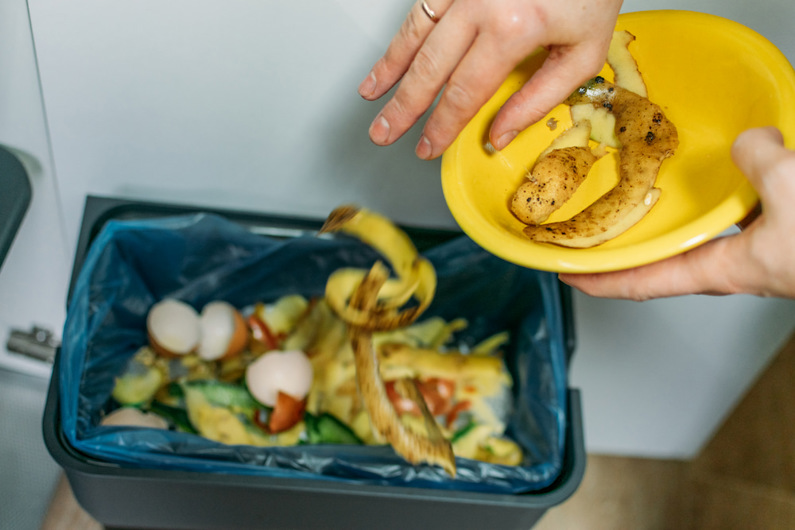
Clean sorting pays off long after the bin is emptied. Source-separated garden and food waste leaves your site as feedstock. Knowing where it goes helps your team see why the green bin matters.
Once collected, food organics and garden organics head to a composting facility or an anaerobic digestion plant. The composting process breaks organic material down into nutrient-rich compost, which is used on farms, parks and gardens. Anaerobic digestion captures the same material to produce renewable energy and soil products. Both paths feed the recycling systems that turn food waste into sustainable resources through organic recycling.
This is FOGO recycling working as a loop. Nutrient recycling returns carbon and nutrients to the soil, and clean streams keep that loop turning. A contaminated load breaks the process, so the quality of your sorting decides the quality of the compost. Garden Organics FOGO only reaches its value when the bin stays clean.
The push reaches well beyond one state. Businesses, food manufacturers and institutions account for much of the food waste generated across the country. Diverting food organics cuts the tonnes of waste annually sent to landfill. Programs run through your local council and local government set collection rules, and states such as Western Australia are rolling out their own FOGO services.
Keep it simple. When food organics has one clear home, sits beside every general waste bin and never overflows, separation stops being a daily effort. That is a system your team can follow without thinking. Set yours up with our Slim Jim® range and BRUTE® bins and accessories, and let the bins do the guiding. For the compliance side, our facility FOGO guide covers your obligations in full.
Start with three: food organics, general waste and mixed recycling. Some sites add paper or bottles and cans where the volume justifies it. More streams only help if each one stays clear, so add them slowly and label them well.
Usually the green bin is too far away or too full. People use the closest working bin. Put a food organics bin beside every general waste bin, and empty it before it overflows. That removes both reasons at once.
Match the bin to the spot. A slim green bin like a Slim Jim® suits a prep bench or a counter. A larger BRUTE® handles the bin room where the day's food waste is consolidated. Sizing each point right keeps bins from overflowing and staff from improvising.
Consistency comes from sameness. Keep the green bin in the same spot and the same colour on every shift and every floor. Fold the green stream into how you brief new staff. When the setup never changes, the habit sticks no matter who is on.
Often enough that they never overflow before collection. Food waste builds fast during service, so a prep-bench bin may need emptying into your back-of-house container several times a shift. A green bin left to overflow is the fastest way to lose a clean stream.