|
Quick Answer: A FOGO-ready waste system separates food and garden organics from general waste and recycling. Place green bins at food prep zones, larger green bins for back-of-house collection, and clearly labelled stations in public areas. Consistent signage, regular reviews, and staff training keep contamination low. |
Food waste makes up a large share of what facilities throw out each week. In New South Wales, the FOGO rollout means many businesses will need to collect food and garden waste separately from general waste. This guide walks through a practical setup for hospitality venues and aged care facilities. It also suits offices and other commercial sites that want to reduce food waste and lift waste management performance.
The NSW EPA is phasing in mandatory FOGO collection services for large food waste generators. Supermarkets, hospitality venues, and food manufacturers are among the first to be affected. Even if your facility falls outside the initial scope, planning early prevents rushed changes later.
Food waste ending up in landfill breaks down without oxygen and releases methane. The state goal is to halve organic waste sent to landfill by 2030, which cuts greenhouse gas emissions across local government areas. Diverting food scraps and other garden waste into a FOGO stream turns organic material into nutrient-rich compost and soil conditioners that improve soil quality. The outcome supports the move toward a circular economy and a sustainable future.
The practical reasons to act are simple. Source-separated FOGO waste reduces general waste bin volume, lowers collection costs, and helps your team meet local government and waste service requirements. Our NSW FOGO compliance guide covers timing and obligations in more depth.
At-source separation catches food waste at the point of disposal. Fruit and vegetable scraps, coffee grounds, and dairy products go straight into a green bin in the kitchen instead of travelling through general waste first.
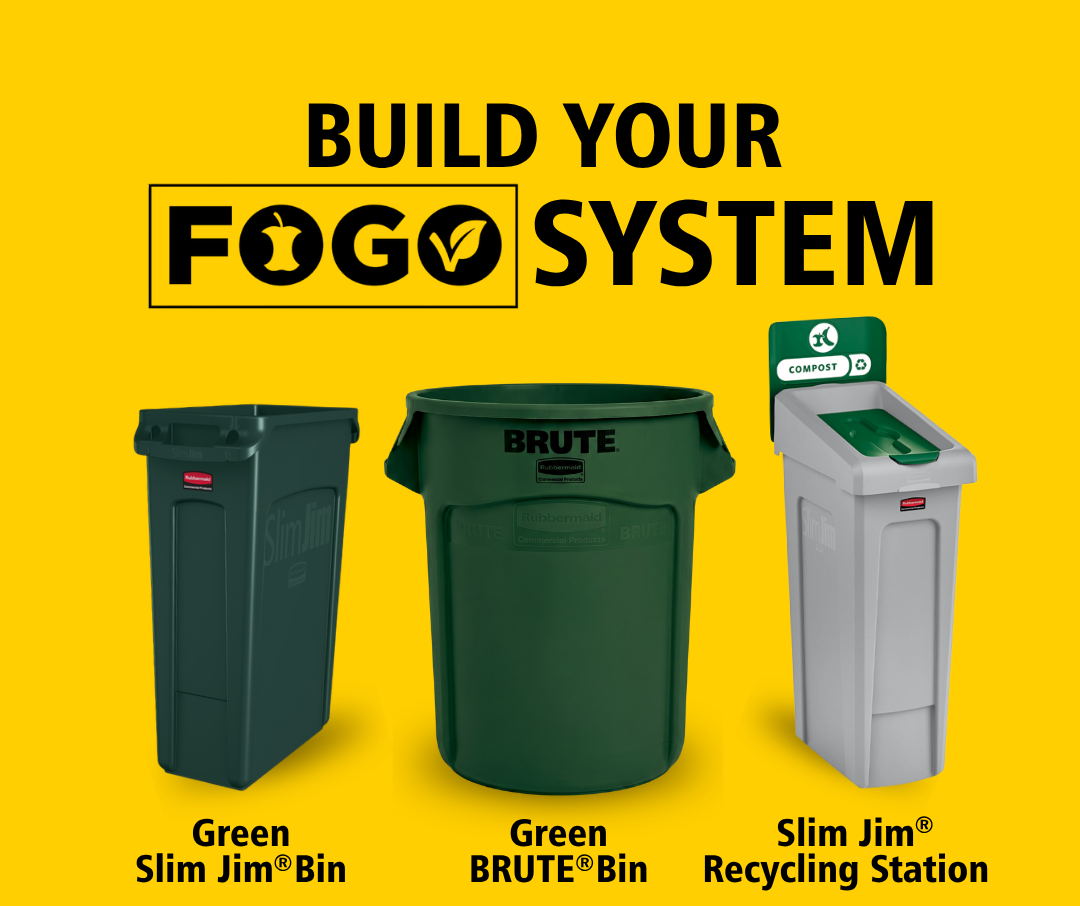
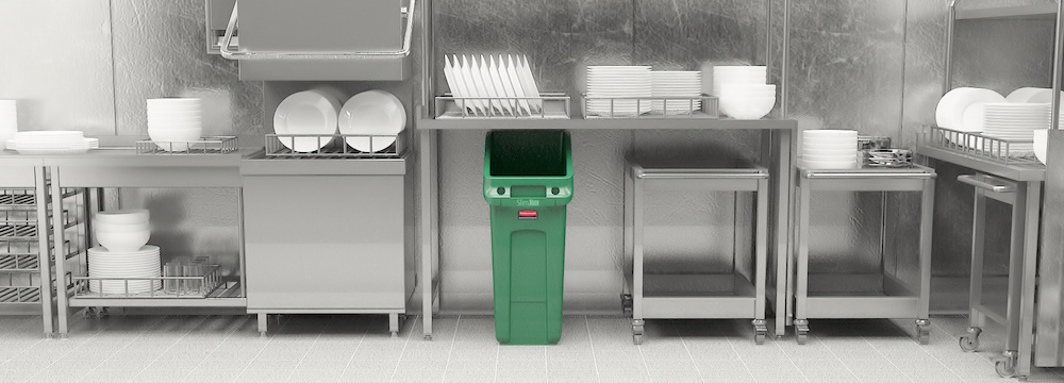
The Green Slim Jim Vented Container is suitable for prep benches, dishwashing zones, and serving stations. Its slim profile fits into tight kitchen spaces where a round bin would not. Venting channels make removing liners up to 80% easier, which matters when food waste liners get heavy fast. Bag cinches hold the liner in place during busy service.
Pair the bin with kitchen caddies on the bench and certified compostable bags or compostable liners that match your processor's list of accepted compostable materials. Place the green bin next to chopping stations and at any point where staff handle food.
Food waste volume builds quickly across a shift. A single kitchen caddy can fill in under an hour during prep. Back-of-house collection bins consolidate the day's organics in one place before pickup.
The Green BRUTE Vented Container handles larger volumes off kitchen lines. The capacity suits loading docks, bin rooms, and rear-of-house holding areas. The reinforced base is built to be dragged over rough surfaces. Venting channels cut liner-pull effort by up to 50%, which protects staff backs over long shifts. Pair the bin with a tight-fitting green lid to reduce odour and keep pests out.
Most commercial FOGO bins are collected weekly or fortnightly, depending on volume. Confirm the schedule with your waste service before launch.
Public and shared spaces work differently. Customers, visitors, and staff need to make a quick decision without overthinking. The choice rests on what they see in front of them.
Slim Jim Recycling Stations bring two, three, or four streams together with colour-coded lids and intuitive openings. The hinged lid inserts accept larger recycling items without jamming. Stations work well in cafés and food courts. They also suit office breakrooms and lobbies, where they feed the organic recycling chain alongside general waste and mixed recycling.
Visual cues do most of the work. Use green for organics and blue for mixed recycling. Red or yellow flags, bottles, and cans. Black or grey takes general waste. Keep the same colour story across every floor.
Contamination is the number one risk in any new FOGO program. A single contaminated bin can downgrade a full load at the composting facility. Four habits cut the risk.
Place bins where decisions happen. If staff have to walk five metres past a general waste bin to find the green one, the wrong items will end up in the wrong place.
Keep bin colours and signage consistent across the whole site. Mixed messaging between floors trains staff to ignore labels.
Train your team on what counts as FOGO. Coffee grounds and vegetable scraps are usually in. Lawn clippings, grass clippings, and small prunings count too. Food-soiled paper and other garden waste often qualify, though confirm with your waste service. Plastic bags and pot plant containers are usually out. Caddy liners only go in if they are certified compostable.
Review collection points every quarter. Bin placement that worked at opening may not match how the kitchen operates six months in.
Use this table to match food and garden organics to the right zone. The full BRUTE bins range includes lids, dollies, and accessories that complete your back-of-house setup.
|
Food Waste Area |
Recommended Bin |
Purpose |
|
Kitchen prep bench |
Green Slim Jim Vented Container |
At-source separation of food scraps |
|
Dishwashing area |
Green Slim Jim Vented Container |
Capture plate scrapings and peelings |
|
Back-of-house bin room |
Green BRUTE Vented Container |
Larger collection volume for pickup |
|
Café or food court |
Slim Jim Recycling Station |
Public multi-stream separation |
|
Office pantry or kitchenette |
Green Slim Jim Vented Container |
Light organic collection |
Work through the five steps before your collection date. Identify food waste zones first. Place green bins where food waste is created. Add larger green bins for back-of-house collection. Label every stream clearly with matching colours and icons. Confirm pickup frequency and accepted items with your waste service before you launch.
A FOGO-ready facility starts with bins that help you reduce waste at every stage. Explore the full waste management range for green BRUTE bins and Slim Jim containers. The line includes recycling stations and accessories built for commercial sites.
FOGO stands for food organics and garden organics. Both go into the same green-lidded bin for collection. From there, the contents move into the composting process or anaerobic digestion, becoming compost and soil conditioners that improve soil quality on farms and parks.
Most facilities use kitchen caddies or a Slim Jim at the point of disposal, then transfer contents to a larger green BRUTE bin or wheeled container back of house. Public-facing spaces use a Slim Jim Recycling Station with a clearly labelled green stream for garden organics, FOGO, and food scraps.
Place green bins right where food waste is generated. Keep bin colours and signage consistent across the whole site. Train staff on accepted items and run quarterly reviews of collection points. Confirm the accepted items list with your waste provider, as rules vary by processor and the local community served.
At-source separation captures food waste at the point of disposal, such as a prep bench or serving counter. Back-of-house collection consolidates smaller bins into a larger container in a bin room or on a loading dock before the waste service picks it up. This two-stage flow means less food waste in general bins and more waste diverted to organic recycling.
Start now, even if your site is not in the first compliance wave. Early preparation gives time to test bin placement, train staff, and switch waste providers if needed. Our guide on preparing for FOGO compliance walks through the steps.