|
NSW businesses that prepare, sell, or handle food face new FOGO mandates requiring them to separate food organics from general waste. The rollout is staged by weekly waste capacity, with the largest generators required to comply first. Non compliance can result in fines of up to $500,000. |
From 1 July 2026, NSW businesses that prepare, sell, or handle food must separate food organics from general waste under the new FOGO mandates. This guide covers the staged rollout, practical steps for food waste separation, and the front-to-back system your facility needs to manage food waste before enforcement begins.
The NSW FOGO mandate begins 1 July 2026 for businesses generating 3,840+ litres of general waste per week
All businesses that prepare, sell, or handle food will eventually need a source-separated food organics collection
The threshold drops to 1,920 litres in 2028 and 720 litres in 2030, capturing most commercial kitchens
Front-of-house needs colour-coded organics bins with clear signage; back-of-house needs durable, high-capacity containers
Non-compliance penalties reach up to $500,000, with additional fines for continuing offences
FOGO stands for Food Organics and Garden Organics. It covers organic waste such as food scraps, spoiled produce, and garden waste, including lawn clippings and prunings.
Under the Protection of the Environment Legislation Amendment (FOGO Recycling) Act 2025, businesses across New South Wales must now separate food waste from general waste and arrange a dedicated collection service for source-separated food organics. The NSW EPA business food waste rules set out what this means in practice: businesses need to stop putting food and garden organics into general waste bins and instead use FOGO collection services through their waste service provider.
This is a legal requirement under the NSW Environment Protection Authority (EPA), not a voluntary guideline. The mandate requires businesses to implement source separated food waste systems. It applies to any business or institution that prepares, sells, or handles food. That includes large supermarkets, hospitality businesses, food courts, food manufacturers, health care facilities, and aged care providers across Greater Sydney and regional New South Wales.
The largest generators of food waste are required to act first. The NSW FOGO mandate rollout is staged by weekly general waste capacity.
1 July 2026: Businesses with 3,840 litres or more of weekly general waste capacity must separate food organics from general waste. This captures hotels, large food courts, and major food manufacturers first.
1 July 2028: The threshold drops to 1,920 litres per week. Mid-sized restaurants, hospitality businesses, and institutional kitchens come into scope.
1 July 2030: The threshold drops again to 720 litres per week. This captures the majority of commercial kitchens and smaller food businesses in NSW. By this date, all local councils must also provide weekly FOGO collection services to households.
Even if your business falls under a later threshold, setting up food waste separation now avoids last-minute disruption. Organics bins, collection schedules, staff training, and waste service provider agreements all take time to establish. Businesses that wait until their compliance date risk operational delays and contamination issues that are far more expensive to fix under pressure.
Non-compliance with the NSW FOGO mandate can result in fines of up to $500,000. Penalties also apply for continuing offences. Beyond financial risk, non-compliance creates reputational damage and disrupts your waste disposal operations.
Getting FOGO compliance right means building a food waste separation system that works across your entire site. That starts with defining your waste streams and placing the right bins where they matter most.
Every facility needs at least three core waste streams: food organics, general waste, and recycling. Some sites may also need to separate garden organics from FOGO streams or accommodate food donation pathways to divert surplus food before it becomes waste.
The key to bin placement is understanding two distinct zones.
Front-of-house (FOH) is where waste decisions happen. Staff, customers, and visitors choose which bin to use in dining areas, lobbies, hallways, and near exits. FOH needs clear signage, colour-coded lids, and intuitive openings that guide people to separate food waste correctly without reading detailed instructions.
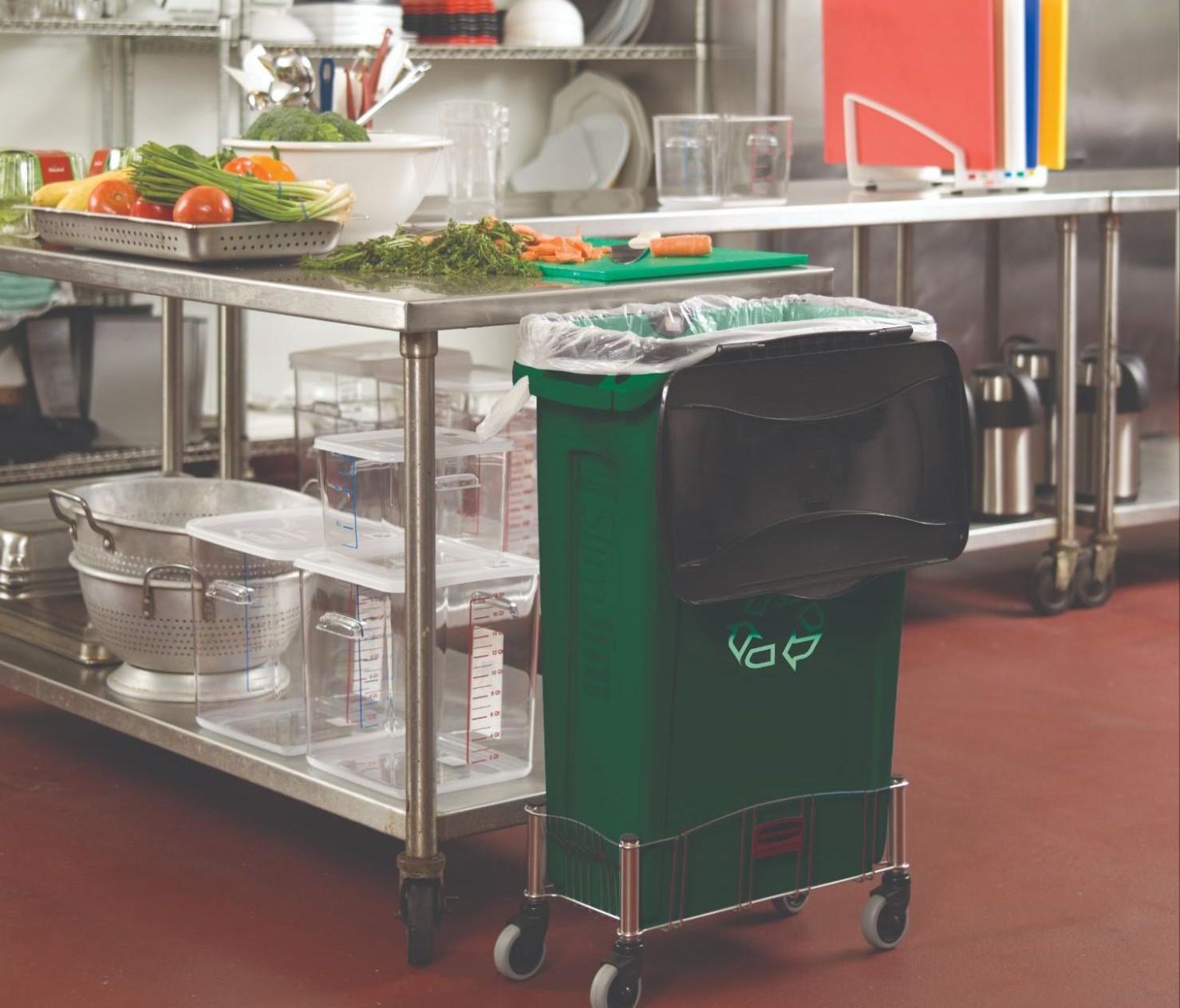
Back-of-house (BOH) is where the volume of food waste accumulates. Kitchens, prep areas, and loading docks generate organic waste in bulk. BOH needs durable, high-capacity containers that can handle daily loads and rough handling. This is also where your FOGO bin staging area feeds into your waste service provider's collection service.
|
Front-of-House (FOH) |
Back-of-House (BOH) |
|
|
Location |
Dining areas, lobbies, hallways, exits |
Kitchens, prep areas, and loading docks |
|
Purpose |
Guide correct waste separation at the point of disposal |
Collect and stage high-volume food waste for pickup |
|
Bin type |
Colour-coded recycling stations with labelled lids |
Heavy-duty containers sized for daily organic waste output |
|
Common mistakes |
Bins hidden in corners, missing labels, no organics stream |
Undersized containers, inconsistent placement, and infrequent servicing |
Contamination is the highest operational cost of poor food waste separation. When food organics mix with general waste or packaging materials and end up in the FOGO stream, loads get rejected by processing facilities. Rejected loads mean re-sorting, higher waste disposal costs, and lower-quality organic content reaching compost facilities.
The NSW Environment Protection Authority reported that a quarter of all business waste going to landfill in New South Wales is food waste. Over 50% of landfill waste in NSW is organic material. Diverting this waste is critical to extending Greater Sydney's landfill capacity, which is projected to be reached by 2030. Every tonne of organic waste diverted from landfill saves 1.5 tonnes of CO2 from being emitted.
Avoiding plastics and glass in the FOGO stream is critical for producing high-quality compost. Clean source-separated food organics can be processed through anaerobic digestion to produce renewable energy, or turned into compost and soil conditioners for parks, sporting fields, and agriculture. Contaminated loads disrupt that circular economy entirely.
Most contamination comes from three sources. The first is unclear waste streams. If staff and visitors cannot immediately tell which bin is for food organics, food waste ends up in the general waste. The second is poor bin placement. Bins placed in low-traffic spots get ignored. The third is inconsistent servicing. When FOGO bins overflow because the collection service schedule does not match volume, staff default to general waste bins.
Working closely with your waste service provider to set the right FOGO collection frequency is one of the most practical steps you can take. Train staff on what goes into each stream. Make source separation part of onboarding for every new team member.
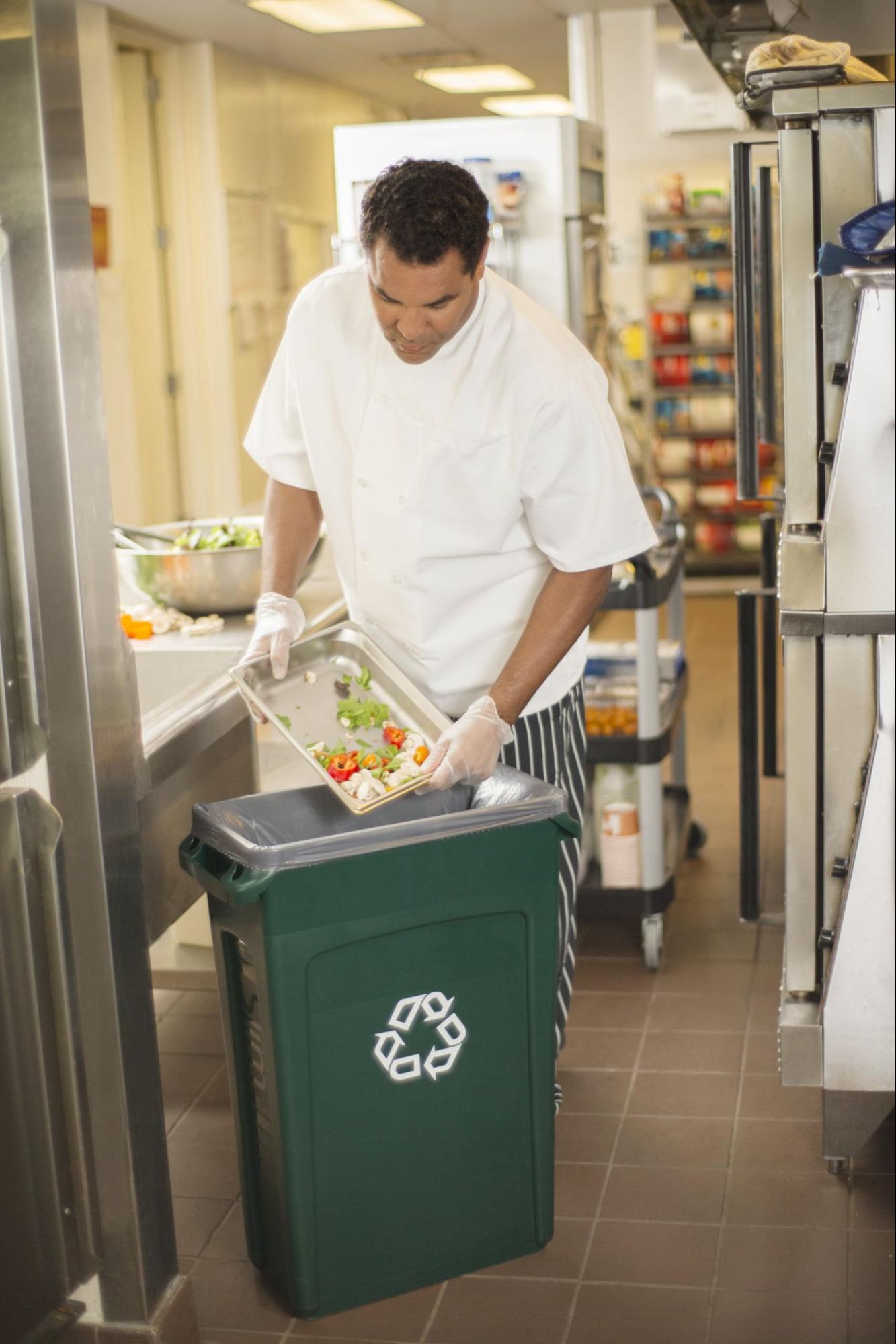
A compliant food waste separation system needs two things: clear FOH sorting and durable BOH collection. Here is how Rubbermaid Commercial products support both through the waste management range.
The Slim Jim® range is purpose-built for front-of-house environments. Each Slim Jim® Recycling Station starts with an 87L base, lid, and snap-in connector. You can build 2-stream, 3-stream, or 4-stream stations by connecting bases without tools or hardware.
Colour-coded lids (including green and brown for organics) with intuitive openings guide users to separate food waste at the point of disposal. Hinged lid inserts accommodate different-sized items. A closed lid option works well for the food organics stream, signalling that only food waste and organic material go inside.
Waste Stream Label Kits complete the system. Each kit includes ten labels in a highly resistant polycarbonate holder that accepts any A4 poster. No holes or bolts needed. Consistent labelling across your site is one of the fastest ways to reduce contamination and keep your FOGO waste stream clean.
Slim Jim® containers also feature venting channels that make removing liners up to 80% easier. Bag cinches secure liners for quick, knot-free changes. These features reduce servicing time and the risk of worker injury during daily handling.
The BRUTE® range handles BOH collection where food waste volume is highest. BRUTE® containers are guaranteed to never fade, warp, crack, or crush. They are available in 10- to 55-gallon sizes, including a 32-gallon composting container designed for organic waste.
Venting channels make liner removal up to 50% easier. Contoured base handles improve grip. The reinforced base is engineered to be dragged over rough surfaces, which is standard in kitchens and loading docks. BRUTE® dollies allow efficient transport of heavy organic waste loads to your FOGO collection staging area. Wheeled BRUTE® options handle loads up to 250 lbs for high-volume sites.
Together, Slim Jim® at FOH and BRUTE® at BOH give your facility a front-to-back food waste separation system that reduces contamination before waste reaches your waste service provider.
Use this to assess your readiness before 1 July 2026.
Waste streams defined (food organics, general waste, recycling at a minimum)
FOH stations are placed where waste decisions happen (dining areas, exits, hallways)
BOH containers sized for daily food waste volume
Clear signage and labels consistent across all locations
FOGO collection service agreed with your waste service provider
Staff trained on what goes in each stream
Food donation pathways were documented where applicable
Servicing cadence matched to volume (organics bins may need more frequent pickup than general waste)
For further information on whether your business falls under the 1 July 2026 threshold, use the NSW EPA's FOGO business mandate calculator.
The NSW FOGO mandate requires businesses that prepare, sell, or handle food to separate food organics and garden organics from general waste. It is introduced under the Protection of the Environment Legislation Amendment (FOGO Recycling) Act 2025 and enforced by the NSW EPA.
The first stage begins on 1 July 2026 for businesses with a weekly general waste capacity of 3,840 litres or more. The threshold drops to 1,920 litres by 2028 and 720 litres by 2030.
Food organics include food scraps, spoiled or expired food, coffee grounds, tea bags, and food-soiled paper. It does not include packaging materials, plastics, glass, or small skips of mixed business waste.
Non compliance can result in fines of up to $500,000. Continuing offences attract additional penalties. The NSW EPA monitors both residential and commercial waste management practices under the new regulations.
Not immediately. The FOGO mandates roll out in stages based on weekly general waste capacity. By 1 July 2030, the mandate will cover all businesses generating 720 litres or more per week of general waste. This captures the majority of commercial kitchens across New South Wales.
Source separated food organics are sent to processing facilities for composting or anaerobic digestion. This produces renewable energy and compost and soil conditioners used in agriculture and land management. Diverting organic waste from landfill also reduces methane emissions and helps extend Greater Sydney's landfill capacity.
The NSW FOGO mandate is less than two months away for the largest generators of business waste. Whether your facility falls under the 1 July 2026 threshold or a later stage, building your food waste separation system now gives you time to get it right.
Explore the Rubbermaid Commercial waste management range to find the right organics bins and collection setup for your site.