Quick answer: Cleaning supports infection prevention in aged care by reducing the number of microorganisms on the surfaces that residents, staff and visitors touch every day. It works best as one part of a broader infection prevention and control program, backed by documented schedules, trained teams, regular audits and suitable equipment. |
Aged care homes are places where people live, share meals and receive personal care every day. That close, shared environment is why infection prevention in aged care needs constant attention. Older people can be more vulnerable to infection, and illness can spread between residents, staff and visitors.
Cleaning is one of the first lines of defence in maintaining a hygienic environment, working alongside hand hygiene, staff training, and other controls. The right aged care cleaning solutions can help your team deliver consistent results.
Cleaning is one part of an infection prevention and control program, not a standalone safeguard.
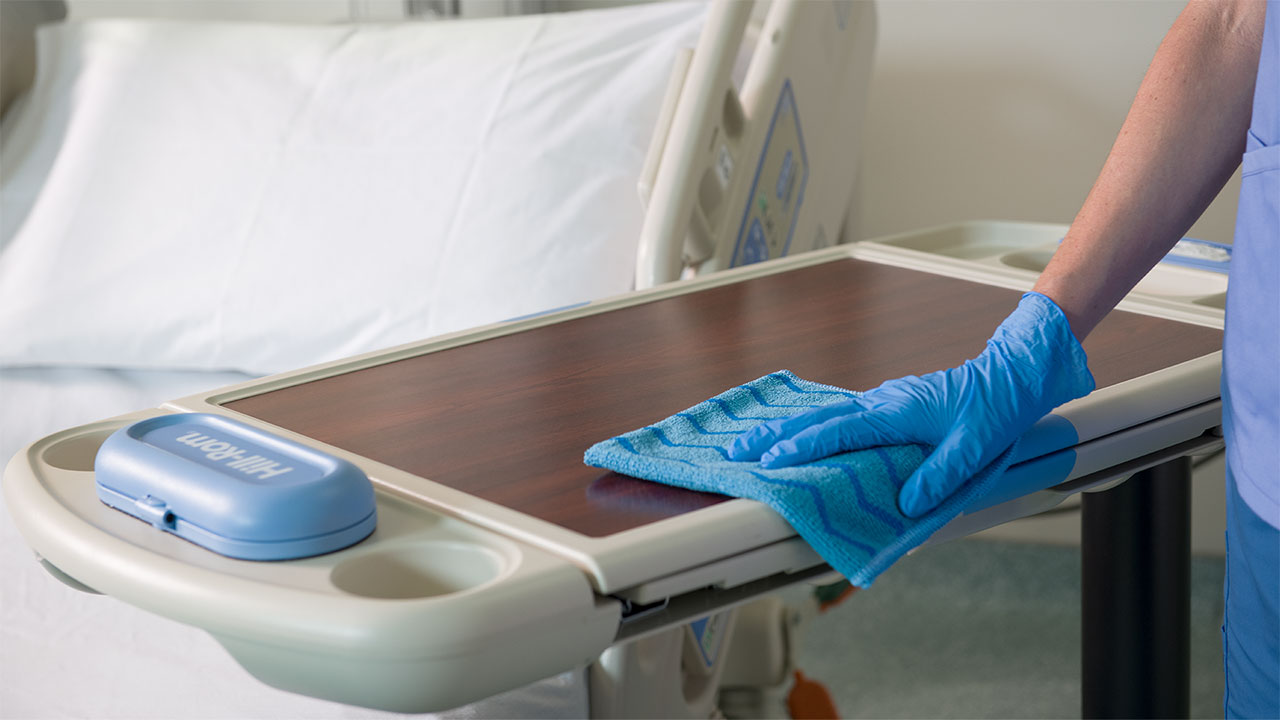
Frequently touched surfaces, such as door handles, handrails and call bells, need the most regular attention.
Reusable microfibre physically lifts dirt and microorganisms, and durable cloths and pads are built for repeated laundering.
Documented procedures, training, and audits help ensure every shift cleans the same way.
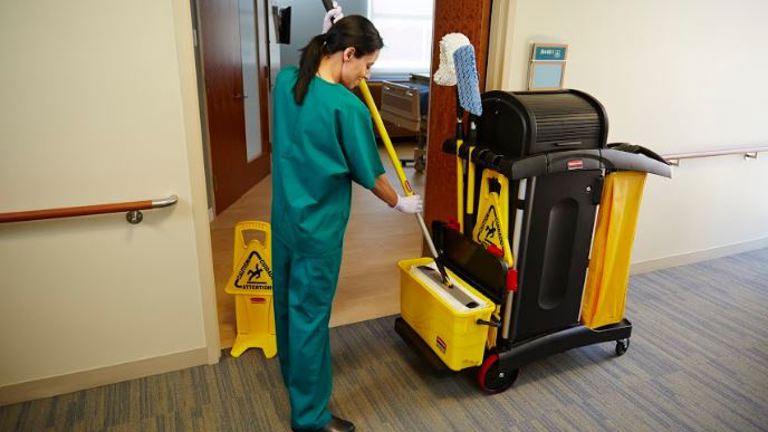
Well-managed cleaning carts keep tools together and support separation of clean and soiled items.
Residents share dining rooms, bathrooms, equipment and carers, so microorganisms on one surface can reach another person through hands and shared items. Routine cleaning reduces what remains on those surfaces.
The Australian Commission on Safety and Quality in Health Care identifies environmental cleaning as a basic part of standard precautions. It is an essential component of any infection prevention and control (IPC) program in its Aged Care IPC Guide. The guide is a supplementary resource tailored specifically for aged care settings. It builds upon the broader Australian Guidelines for the Prevention and Control of Infection in Healthcare.
These six steps can help aged care providers turn national guidance into a routine that healthcare workers, personal care staff and cleaners can all follow.
Document who cleans what, how often and with which products, so the process is clear for everyone. National guidance recommends a risk-based approach, tailoring schedules to the infection risks in each setting and increasing frequency when needed, such as during an outbreak. Services delivered in home and community settings also need a plan suited to each older person's situation.
Our A Higher Level of Clean resources include checklists and guides to support hygiene in aged care in Australia.
Surfaces handled many times a day carry a higher risk of contamination. In a residential aged care facility, they commonly include:
Door handles, handrails and light switches
Call bells and bedside tables
Computers, keyboards and telephones
Mobility aids such as walkers, wheelchairs and walking sticks
Contact points on commodes and bathroom hoists
National guidance recommends cleaning frequently touched surfaces with a neutral detergent solution at least daily, when visibly soiled and after each contamination. Contact points on commodes and hoists should be cleaned after each use.
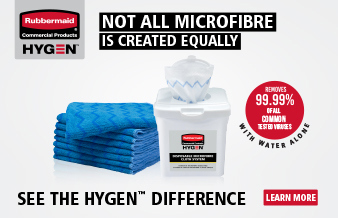
Scrubbing is an important step in routine cleaning because it physically reduces microorganisms on a surface. Our split-blended fibres are up to 100 times thinner than a human hair, helping them reach tiny crevices where bacteria and viruses can hide. In third-party testing, HYGEN™ durable microfibre removed 99.9% of tested viruses and bacteria with water alone.* Facilities should still use the detergents and hospital-grade disinfectants specified in their IPC program.
Reusable microfibre cleaning also aligns with guidance to launder reusable cloths and pads daily after use in a care environment, and to favour reusable items where safe, in the interest of environmental sustainability.
For surfaces: HYGEN™ Durable Microfibre Cloths are designed to withstand up to 500 launderings, or 200 with bleach.
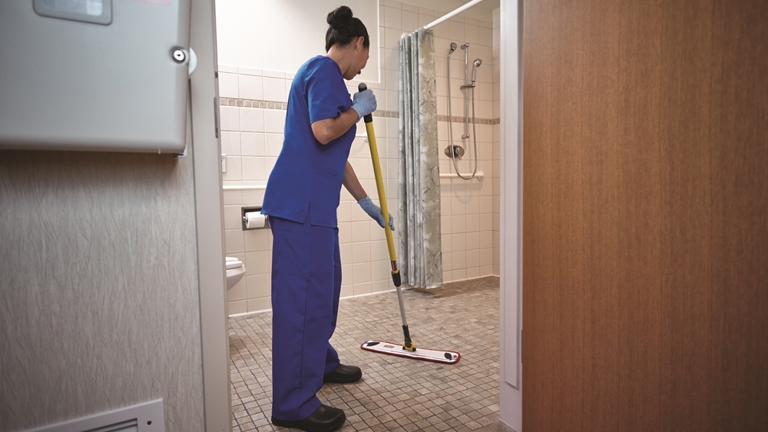
For floors: HYGEN™ Durable Microfibre Mop Pads hold enough solution to clean up to 23 square metres. Explore our full range of mop pads to find the right size and colour.
*Based on third-party testing with water alone on a VCT surface.
Agree on one method across every shift. Clean high surfaces before low surfaces and clean areas before dirty areas, such as bedrooms before bathrooms. Wipe in one direction using an S-shaped pattern.
Colour coding helps restrict cloths and mops to designated areas, such as bathrooms, kitchens or isolation rooms. Our HYGEN™ cloths come in blue, red, green and yellow to match your facility's system, and our eight-sided fold lets teams clean up to eight surface areas with one cloth.
Keep the right healthcare cleaning equipment within reach to reduce trips to the storage room. Our cleaning carts keep tools and supplies together on each round. The Executive Janitorial Cleaning Cart includes three shelves, hooks and holders, plus a front-access zippered bag that lets staff remove waste without lifting it through the top.
HYGEN™ Microfibre Cleaning Systems pair our microfibre with compatible tools. Our Hardware Kit includes a cleaning cart, Quick Connect extension handles, a wet/dry frame, a flexible dusting wand, a charging bucket, and four colour-coded disinfection pails.
National guidance also says to keep clean and soiled items separate, clean carts thoroughly at the end of the day, store hazardous chemicals in a locked compartment and lock carts when unattended. Optional door kits and security hoods are available for the Executive Janitorial Cleaning Cart.
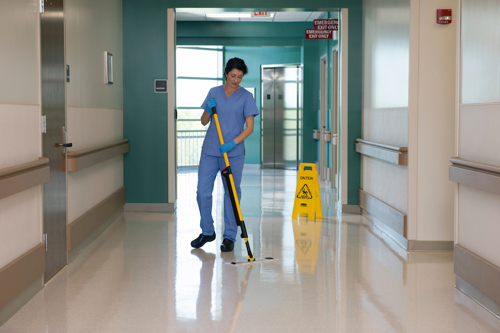
Provide staff and contractors with initial and ongoing education on IPC principles, hand hygiene, PPE, and product selection. An IPC lead or nurse with IPC responsibilities can then check how well cleaning is working with visual inspections and objective methods, such as fluorescent gel markers. Share the results with clinical, non-clinical and support staff so they can improve cleaning practices.
Environmental cleaning is a vital part of infection prevention and control in aged care, and it works best alongside strong IPC systems, trained people and regular review. Clear procedures, durable microfibre and organised workflows can help your team maintain cleanliness across every shift.
Explore RCP's aged care cleaning solutions to find the right tools for your facility.
Environmental cleaning reduces the number of microorganisms on surfaces shared by residents, staff and visitors in aged care homes. It is an important part of standard precautions and works alongside hand hygiene, PPE and transmission-based precautions. It also supports compliance with the strengthened Aged Care Quality Standards under the Aged Care Act, and the Aged Care Quality and Safety Commission provides resources to help providers meet these safety standards.
They are surfaces and items people handle often, such as door handles, handrails, light switches, call bells, bedside tables and mobility aids. People touch these items repeatedly while providing care and moving around a facility. National guidance recommends that aged care organisations clean frequently touched surfaces at least daily, when visibly soiled and after each contamination.
Fine microfibres help lift and trap dirt and microorganisms during cleaning. HYGEN™ durable microfibre removed 99.9% of tested viruses and bacteria in third-party testing with water alone on a VCT surface. It doesn't replace disinfection where required, hand hygiene or safe practices for managing procedures and invasive devices.
Common equipment includes microfibre cloths and mop pads, frames and handles, dusting tools, buckets, approved cleaning solutions, PPE and cleaning carts. National guidance says equipment should be intended for cleaning, be in good working order, and be approved by the organisation. Our team helps aged care customers match the right HYGEN™ microfibre products to their facility's cleaning needs.
Start with a documented schedule, a set cleaning sequence and colour coding. Successful implementation also depends on core elements such as initial and ongoing training, regular audits and clear responsibilities for every shift. Organised carts help teams keep the right tools within reach, while audit results show aged care organisations where cleaning processes need to change.