Quick Answer: High-touch points in aged care are surfaces that residents, staff, and visitors touch multiple times throughout the day. Common examples include bed rails, light switches, door handles, nurse call buttons, taps, toilets, and handrails. These surfaces need daily cleaning with the right tools, such as HYGEN™ microfibre cloths and mops, to reduce the spread of germs.
In aged care facilities, a single surface can be touched by multiple people within the hour. A resident grips a bed rail, a carer presses the nurse call button, and a visitor opens the door on the way out. Each contact can carry bacteria and viruses from one person to the next. That is why aged care cleaning needs to focus on the surfaces hands reach most, not just the ones that look dirty.
Residents are more vulnerable to infections, so high-touch surfaces deserve the same attention they would get in a hospital or other healthcare settings. This guide covers the key touchpoints in resident rooms and bathrooms, the task each one needs, and the aged care cleaning solutions that help your team clean them consistently.
High-touch surfaces are a main route for pathogens to spread between residents, healthcare workers and visitors.
Resident rooms and bathrooms each have touchpoints that need attention during routine cleaning.
Matching the right tool to each task improves cleaning quality and reduces cross-contamination.
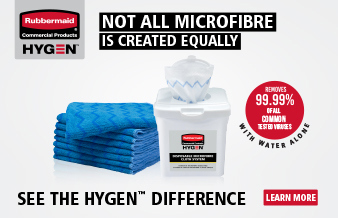
HYGEN™ microfibre removes 99.9% or more of tested pathogens using water only.
Consistent processes and a set cleaning frequency help maintain hygiene standards.
The resident room is where most daily contact happens. Breaking it into zones makes it easier to create a cleaning route that covers every touchpoint.
Bed rails, over-bed tables, nurse call buttons, remote controls and phones are handled constantly. Over-bed tables also come into contact with food. Wipe these items during every clean, and again whenever they are visibly soiled.
HYGEN™ Microfibre Cloths are built for this task. Their split microfibre and built-in scrubber reach into grips and edges, removing dirt and microorganisms that ordinary cloths leave behind. Each cloth withstands up to 500 launderings, supporting cost-effective washing programs.

Light switches, door handles, window handles, chair armrests, and sinks and taps are touched every time someone enters or leaves. Use a fresh side of the microfibre cloth for each surface. The eight-sided fold gives staff multiple clean faces per cloth, so contamination is not carried between fixtures.
The tops of wardrobes, picture frames, ledges, and vents collect dust that can carry germs. The HYGEN™ Flexible Dusting Wand bends to fit irregular shapes and connects to a telescopic handle for safe access without overreaching.
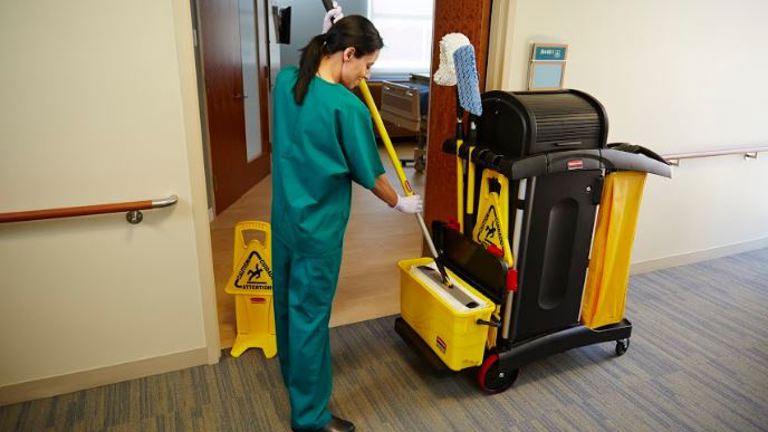
Remove dust and hair first with a Microfibre Dust Mop with Fringe. For spot debris, the Lobby Pro® Dust Pan and Lobby Broom let staff sweep without bending. This pairing also suits reception areas, communal spaces and other high-traffic areas. Finish with a HYGEN™ Microfibre Damp Mop.
Moisture, personal care and frequent contact make bathrooms the highest-risk space for transmission.
These surfaces are the most likely to be contaminated with bodily fluids, so clean them last. Use a dedicated red HYGEN™ microfibre cloth and keep it separate from cloths used elsewhere in the room.
Hands touch these before and after washing. Wipe tap handles, basin edges and dispenser push points with a HYGEN™ microfibre cloth.
HYGEN™ Glass Microfibre Cloths leave mirrors streak-free and lint-free. Light switches and door handles can be cleaned with the bathroom cloth.
Shower walls, seats and grout lines need scrubbing rather than wiping. The HYGEN™ Flexi-Frame flexes to follow curved and flat surfaces, and its arc shape pulls hair and debris toward the centre. Fitted with the Scrubber Cover, vertical scrubber stripes clean into grout lines where soap scum and bacteria build up.
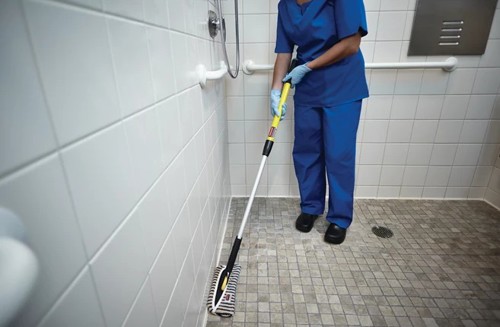
The HYGEN™ Microfibre Wet Pad with Scrubber lifts stubborn marks around toilets and drains. Place a Caution Wet Floor Sign at the doorway during and after mopping, as residents are more prone to falls.
Tools only work properly when they are part of consistent practices:
Clean top to bottom, cleanest to dirtiest. Finish with the bathroom and floors.
Clean before you disinfect. Remove dirt first, then apply disinfectant where your infection prevention policy requires it. The surface must stay wet for the full dwell time on the label.
Set a cleaning frequency. High-touch areas need daily cleaning at minimum, and more during outbreaks.
Include shared equipment. IV pumps, lifters and mobility aids move between rooms and clinical zones. Clean them between residents with microfibre or approved disinfectant wipes.
Use colour coding. For example, blue for general areas and red for bathrooms.
Empty waste last to avoid recontaminating clean surfaces.
When your team knows which surfaces matter and has the right tools on hand, cleaning becomes more consistent. Explore our HYGEN™ microfibre range and Aged Care Solutions to support your facility.
They are surfaces that are often touched by residents, staff, and visitors, sometimes called frequently touched surfaces. Because so many hands touch them, they can serve as a pathway for germs.
Bed rails, light switches, nurse call buttons, remote controls, door handles, over-bed tables, sinks and taps, window handles, phones and chairs.
Toilets, commodes, seats, handrails, taps, dispensers, and mirrors. Toilets and commodes carry the highest risk and need a dedicated cloth.
Colour-coded microfibre cloths, damp mops, dust mops, dusting wands, pans and brooms, and wet floor signs, alongside detergent and disinfectant. Many cleaning services and in-house teams choose HYGEN™ microfibre for its proven ability to remove pathogens with water alone.
Older residents face a higher risk of serious infection. Disinfecting high-touch points after cleaning is essential to protect the health of patients, residents and healthcare workers.