Healthcare facilities cannot afford inconsistency in maintaining a clean and hygienic environment. They need processes that are repeatable, compliant, and designed to prevent cross-contamination at every step. With disposable microfibre now proven to remove up to 99.99% of tested bacteria and viruses using only water, more facilities are rethinking how they handle high-risk areas.
Cross-contamination occurs when bacteria and viruses are transferred from a contaminated surface to another. This transfer happens through direct or indirect contact with hands, cloths, utensils, or equipment. It does not require visible dirt or debris. Even dry surfaces that look clean can harbour harmful pathogens.
In hospital kitchens and aged care food service areas, cross-contamination is a daily concern. For example, using the same chopping board for raw meat and ready-to-eat food without washing it in between can spread bacteria like Salmonella and E. coli. Raw meat juices can transfer to food that will not be cooked again before eating. Storing raw food above ready-to-eat food items in the fridge creates the same risk.
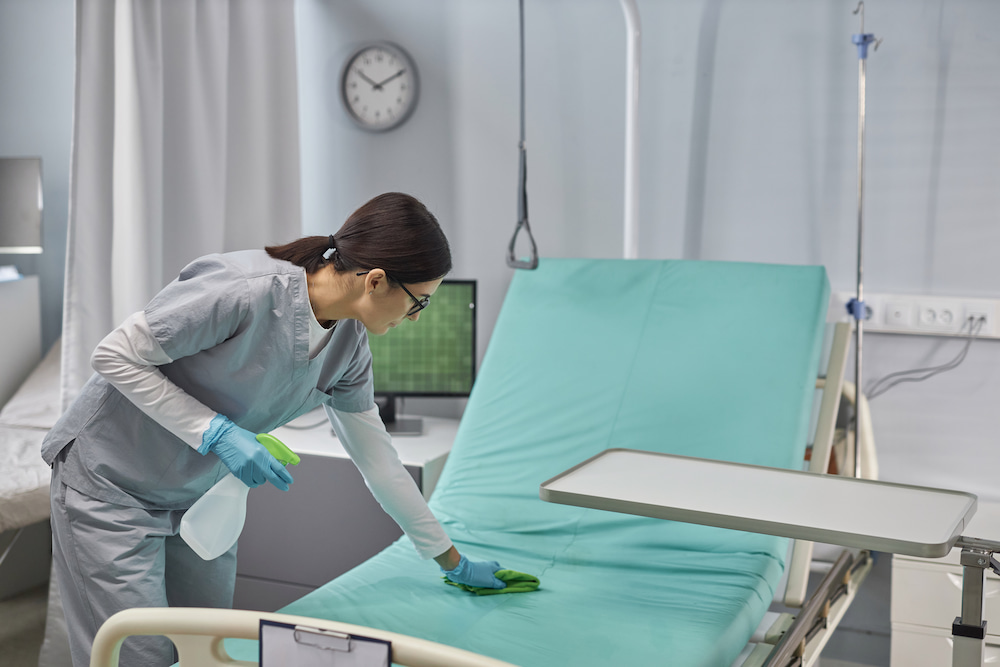
The same principle applies to clinical areas. A chopping board used for raw meat in the food-preparation kitchen and a cloth used on a bed rail in a patient room share the same problem. If either is not properly cleaned or replaced, bacteria are transferred to the next surface.
In patient care areas, contaminated cloths and equipment can move pathogens like MRSA and C. difficile between rooms just as easily. Following food safety and infection control protocols at every step is what separates a compliant facility from one at risk.
Research shows that up to 27% of laundered reusable microfibre mop heads still carry pathogens after industrial laundering. That means a cloth or mop pad ready for use may actually introduce new bacteria. This is where infection prevention cleaning protocols become critical.
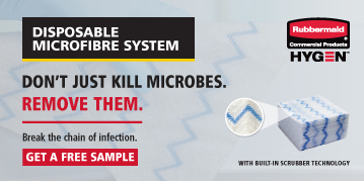
Single-use microfibre addresses the root cause of cross-contamination in professional cleaning: cloth reuse. Instead of relying on laundering to remove all bacteria from a reusable cloth, each pad or cloth is used once and discarded. Every area gets a fresh start.
The HYGEN™ System has been tested at independent laboratories against a range of harmful pathogens. The cloths and mop pads remove up to 99.99% of tested bacteria and viruses with water only. This includes MRSA, SARS-CoV-2 Omicron, C. difficile, Pseudomonas aeruginosa, and Feline Calicivirus (a surrogate for Norovirus).
Peer-reviewed studies confirm that microfibre significantly reduces MRSA, E. coli, and C. difficile spore levels on high-touch surfaces. The fine synthetic filaments are significantly finer than human hair. This gives the cloths their ability to trap dirt and microorganisms that traditional options miss.
Each cloth or mop pad is designed for single use. After one area or room, it is discarded. This eliminates the chance of transferring viable pathogens between zones.
Colour-coded options are built into the system. Blue, green, red, and yellow cloths and mop pads let teams assign specific colours to specific areas. This prevents cross-contamination between bathrooms, patient rooms, kitchens, and general zones. It is a simple system that is easy to follow and requires no guesswork.
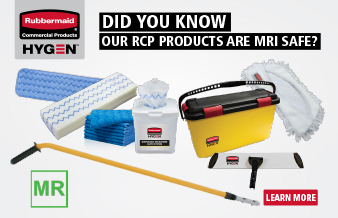
The mop pads are ready to go straight from the pack. The HYGEN™ Charging Tub moistens up to 40 cloths at once. This keeps cloths ready, dry until needed, and organised for fast-paced routines in hospitals and aged care.
The cloths are compatible with common disinfectant solutions, including quaternary ammonium compounds (Quat), Chlorine Bleach, and Hydrogen Peroxide. Unlike split-blended microfibre, the monofilament polyester construction does not bind with Quat. This means the disinfectant works as intended.
Hospital trials at Albert Einstein Hospital showed that switching to this system reduced chemical consumption by 47%. Daily task time dropped by 19% compared to traditional methods. These are not small gains. They free up teams to focus on high-risk zones while reducing the volume of chemicals required across a facility.
HYGEN™ Mop Pads also deliver up to 2x more coverage per pad. This means fewer pad changes and faster room turnovers.
The cloths are safe for delicate areas and do not leave lint or streaks. The fine synthetic filaments are non-abrasive. This makes them a good fit for sensitive equipment, monitors, glass, and polished finishes. They dry quickly without leaving detergent residue behind.
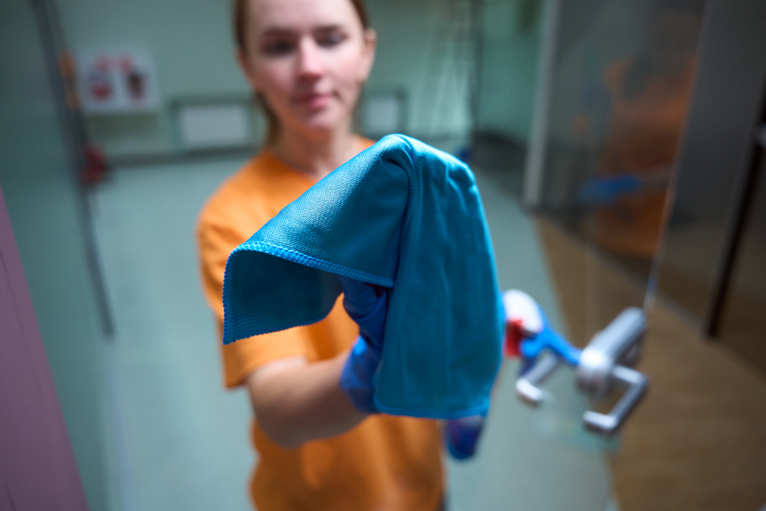
Launderable microfibre cloths and mop pads work well for routine tasks. The issue is not the product itself. It is the laundering process.
Commercial laundering requires consistent water temperatures, correct detergent dosing, proper handling during collection, and dry storage after washing. When any of these steps breaks down, contaminated cloths can re-enter circulation. Even facilities that follow standard precautions face this risk.
A study found that 93% of reusable hospital cloths tested contained bacteria after laundering. That is not an outlier figure. It reflects how difficult it is to maintain a clean and hygienic environment when the tools themselves are not reliably decontaminated.
For facilities with limited laundering capability, the problem compounds. Without access to commercial-grade equipment that meets infection control guidelines, reusable cloths become a liability rather than an asset.
Disposable microfibre is not required everywhere. The right approach depends on the area, the level of cross-contamination risk, and the facility's laundering capability. Many facilities use both types and assign them based on where they matter most.
|
Disposable Microfibre |
Launderable Microfibre |
|
|
Best for |
Isolation rooms, bathrooms, outbreak zones, food preparation areas |
General corridors, lobbies, offices, common areas |
|
Cross-contamination control |
Single-use removes transfer risk between rooms |
Requires compliant laundering to reduce recontamination |
|
Laundering required |
No |
Yes, with hot water and bleach per CDC guidelines |
|
Pathogen removal |
Up to 99.99% of tested bacteria and viruses with water only |
Up to 99.99% of tested bacteria and viruses with water only |
|
Durability |
Single use |
Up to 500 commercial launderings (200 with bleach) |
|
Chemical compatibility |
Quat safe (no binding), Chlorine Bleach, Hydrogen Peroxide |
Quat safe with split-blended microfibre, Chlorine Bleach |
|
Ideal when |
Laundering is unavailable during outbreaks or in high-risk zones |
Commercial laundering and clean dry storage are available |
Choose disposable microfibre for high-risk and single-use settings. Isolation rooms, bathrooms, and outbreak response areas are the clearest cases. These are zones where bacteria and viruses spread rapidly through contact with affected surfaces. Single-use cloths and mop pads reduce the risk of carrying pathogens from one room to another. During outbreak periods, there is no waiting for laundered cloths to dry or become ready. A fresh cloth is always available.
High-touch areas also benefit. Door handles, bed rails, light switches, and equipment controls are touched by multiple hands throughout the day. A fresh disposable microfibre cloth removes bacteria from these points without leaving residue.
Food preparation areas within hospitals and aged care are another clear fit. Anywhere raw food is handled presents a cross-contamination concern. Surfaces that contact raw meat, chopping boards, and utensils should be wiped with a fresh cloth each time.
Facilities without access to professional laundering should also default to disposable microfibre. Aged care homes, smaller clinics, and schools may not have commercial-grade equipment that meets infection control standards. Disposable microfibre gives these facilities a reliable product that requires no laundering at all.
Choose launderable microfibre for routine, lower-risk areas. General corridors, lobbies, offices, and common areas are well-suited to launderable cloths and mop pads. This option works when commercial laundering with hot water and bleach is available, and the facility can maintain clean, dry storage for washed clothes. Launderable HYGEN™ microfibre cloths withstand up to 500 commercial launderings and 200 launderings with bleach per CDC recommendations. They are built to last long and deliver consistent results over time.
The decision does not have to be all or nothing. Launderable microfibre handles the daily tasks in low-risk areas. Disposable microfibre covers the zones where safety and infection control matter most.
Cross-contamination does not wait for a process gap to be fixed. Every area wiped with a reused cloth is a risk transferred. Disposable microfibre removes that variable from the equation.
Explore the full HYGEN™ Disposable Microfibre range, including cloths, mop pads, and the Charging Tub system. Find the right product for your facility through the Rubbermaid Commercial Cleaning Range.