Quick answer: An effective hospital cleaning mop uses split microfibre to trap pathogens instead of spreading them. A single-use workflow, with a fresh pad for every room and colour-coded pads for different zones, helps break the cross-contamination pathway. HYGEN™ Disposable Microfibre Mop Pads are built for this workflow and work with most floor cleaning equipment.
Around 165,000 healthcare-associated infections (HAIs) occur in Australian health facilities each year, making them the most common complication affecting patients in hospital. These infections account for two million hospital bed days in Australia each year. That's a high cost in terms of patient safety, hospital resources, and time.
Choosing the right floor-cleaning products that can do more than spot cleaning is one of the most practical ways healthcare providers can help slow the spread of germs. It supports safer wards, treatment rooms and other high-traffic areas across the facility.
Hospital floors act as reservoirs for bacteria and viruses that transfer to hands, medical equipment, and other surfaces.
A single-use hospital cleaning mop workflow provides every room with a fresh pad and helps reduce the risk of cross-contamination.
Colour-coded pads keep cleaning zones separate, which aligns with NSQHS infection-prevention requirements.
HYGEN™ Disposable Microfibre Mop Pads remove 99.99% of tested viruses and bacteria with water alone*.
The pads are compatible with common disinfectants including quat, chlorine bleach and hydrogen peroxide.
Hospital floors are constantly recontaminated. Foot traffic brings in dirt and germs from outside. Spills, dropped equipment and dust from linen and furniture add to the load. Bacteria like MRSA, C. difficile and norovirus settle on floors, then move onto shoes, trolley wheels, bed rails and walls.
A traditional mop that gets reused across multiple rooms, dipped back into shared buckets of cleaning solution, can spread contamination faster than it removes it. Contaminated water becomes a vehicle. Reusable pads that haven't been through a proper wash cycle carry germs into the next room. In healthcare facilities, that transfer pathway is a real safety risk.
The national data makes the case for closer attention. Staphylococcus aureus bloodstream infections in public hospitals remained below 0.8 cases per 10,000 patient-days, and 220,486 hospitalisations involved at least one hospital-acquired complication. According to the Australian Institute of Health and Welfare, the most recorded type of complication was healthcare-associated infection (29%). Cleaning staff are on the front line of preventing that outcome, and their cleaning supplies need to match the job.
A clinical-grade hospital cleaning mop stands apart from general-purpose mops in four key ways: its fibre's ability to capture pathogens, a workflow that prevents pad reuse, strict separation of cleaning zones, easy manoeuvrability, and compatibility with your cleaning chemicals. When these features are correctly implemented, hospital floor cleaning becomes a powerful component of infection prevention rather than a potential weak link.
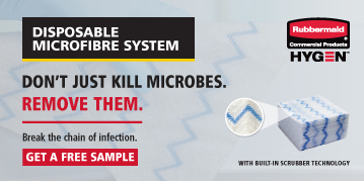
Split microfibre pulls bacteria and viruses into thousands of tiny fibre channels, holding contamination inside the pad rather than dragging it across the floor. HYGEN™ Disposable Microfibre Mop Pads are highly effective, removing 99.99% of tested viruses and bacteria using only water. Third-party tests on VCT surfaces have confirmed their ability to eliminate pathogens such as Feline Calicivirus (a stand-in for human norovirus), common human coronavirus OC43, Pseudomonas aeruginosa, C. difficile, and MRSA. This exceptional performance meets the high standards demanded in clinical cleaning environments.
Standard cotton mops don't behave the same way. They push dirt, dust and germs around. They saturate quickly, then leave streaks and residue on floors. In healthcare organisations where cleanliness is measured against strict protocols, that difference matters.
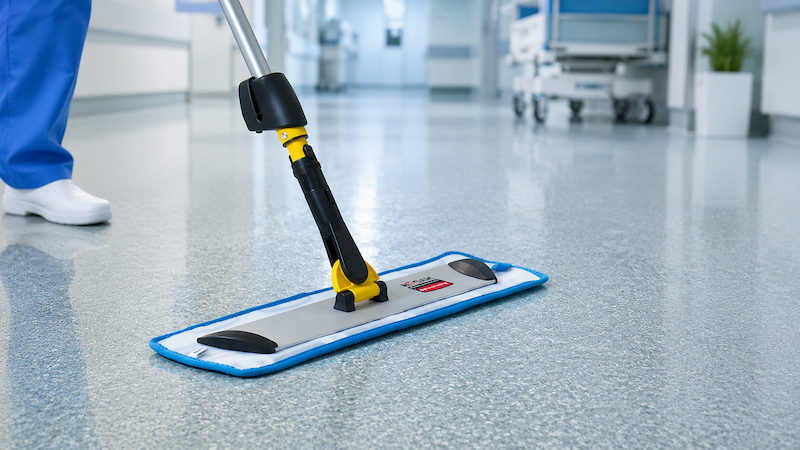
The single-use workflow is efficient and straightforward. Cleaning staff attach a fresh HYGEN™ Disposable Microfibre Mop Pad, clean the room, remove the pad and dispose of it as waste before moving to the next area. No re-dipping into shared buckets. No pads sitting in a laundry queue. Every patient room, isolation area and treatment bay gets a pad that has never touched another surface.
For critical care applications, this is one of the most direct ways to reduce the risk of cross-contamination between patients. A single-use solution also removes the guesswork around whether a laundered pad was washed correctly and stored to a suitable standard. When you throw the pad out, contamination goes with it.
Colour coding is standard practice in Australian healthcare cleaning and forms part of the NSQHS Preventing and Controlling Infections Standard. Different colours signal different zones. Red for bathrooms and high-contamination areas. Blue for general patient rooms. Green for kitchens and food service areas. Yellow for isolation rooms.
HYGEN™ Disposable Microfibre Mop Pads come in colour-coded options, allowing cleaning staff to match pads to protocols at a glance. That visual cue helps prevent a pad from ever crossing from a bathroom into a treatment bay. It also makes training easier for new staff and reduces the chance of error during busy shifts.
New HYGEN™ Disposable Microfibre Mop Pads deliver up to 2x more cleaning coverage than reusable alternatives. That means fewer changeovers, better productivity and less time spent stopping to swap pads mid-clean. The Royal Melbourne Hospital saw similar workflow gains when they moved to HYGEN™ microfibre.
The pads also work with the disinfectants Australian healthcare facilities already use. Quat does not bind to the fibre, so the pad delivers the chemical to the floor at full strength. Chlorine bleach and hydrogen peroxide are also compatible. That means facilities don't need to change their cleaning chemicals or disinfection protocols to adopt a single-use workflow.
The move to a single-use mopping program doesn't have to happen overnight. Start with an audit. Walk through your facility with your cleaning team and note where the risk of cross-contamination is highest. ICU, isolation rooms, operating theatres, oncology wards and bathrooms are common starting points. These are the zones where a single-use hospital cleaning mop delivers the most value. Our guide to hospital environmental services best practices walks through the wider protocol considerations.
From there, map colour codes to specific areas and document the changes in your cleaning protocols. Train cleaning staff on the fresh-pad-per-room rule, and ensure supervisors reinforce it during shift handovers. Stock levels matter here. Running out of pads mid-shift defeats the purpose of the program, so build a reorder point into your cleaning supplies inventory.
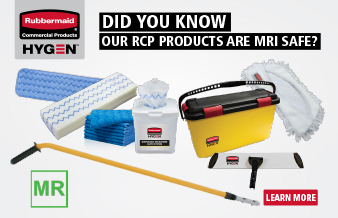
HYGEN™ Disposable Microfibre Mop Pads work with existing HYGEN™ mop frames and quick-connect handles, so most facilities can transition without replacing their full mopping setup. That keeps the switch practical and limits upfront costs. Storage is also simple. The pads are compact and stack neatly, so they don't take up excess space in cleaning trolleys or storerooms.
For deep clean cycles and terminal cleans in high-risk rooms, the single-use workflow adds an extra layer of confidence. Cleaning staff know that each pass across the floor is made with a fresh pad.
Ready to build a single-use mopping program that supports your infection prevention protocols? Explore HYGEN™ Disposable Microfibre Solutions and see how the range fits into your facility's cleaning workflow.
Split microfibre mops are preferred in healthcare settings because their fibre structure traps and holds bacteria and viruses rather than spreading them across floors and other surfaces. For high-risk clinical areas, disposable microfibre pads add the benefit of a guaranteed fresh pad for every room.
Best practice is a fresh pad for every patient room, isolation area and treatment bay. Reusing a pad across rooms creates a direct pathway for germs to spread, which is why single-use systems are recommended for critical care and high-risk cleaning tasks.
Yes. Quality disposable microfibre pads are compatible with common healthcare disinfectants, including quat (which does not bind to the fibre), chlorine bleach, and hydrogen peroxide. That makes them compatible with most existing hospital disinfection programs. Their durability ensures they withstand the cleaning method without breaking down, maintaining effectiveness throughout use.
Colour coding assigns specific pad colours to zones, preventing cross-contamination by ensuring, for example, red pads used in bathrooms aren’t used elsewhere. This simple visual system supports safer, consistent cleaning in hospitals, aligning with infection prevention protocols and enhancing the effectiveness of hospital cleaning mops and supplies.
Yes. Disposable microfibre pads match the pathogen-removal performance of quality reusable pads while adding the workflow advantage of a fresh pad for every room. They also deliver up to 2x more cleaning coverage per pad, which supports cleaning staff productivity. Choosing the right floor cleaning equipment, including these disposable pads, ensures that hospital floors are cleaned efficiently and effectively. This reduces the risk of contamination and improves overall housekeeping standards.