Every facility runs on movement. Linens need to reach guest rooms. Cleaning supplies travel between floors. Maintenance teams haul tools from one end of a building to the other. These tasks are repeated hundreds of times a week, and when the material-handling equipment behind them is wrong, time leaks out of every shift.
A heavy-duty utility cart is one of the most practical investments a facility can make. The right utility carts reduce strain on workers, speed up restocking runs, and keep supplies organised across multiple trips. The wrong ones slow teams down, create safety risks, and fall apart within months.
This guide covers what to look for when choosing heavy-duty utility carts, where they work best, and how to standardise utility carts across sites for long-term value.
Restocking rooms, transporting materials between departments, collecting linens, and running maintenance supplies across a building are tasks that rarely get measured. But they add up fast.
Workers who rely on manual carrying make more trips. They carry fewer supplies per trip. They also face higher risks of manual handling injuries, which can lead to workplace injuries and lost productivity over time. Transporting heavy or bulky items without the right equipment places unnecessary physical demands on staff and increases the risk of on-the-job injury.
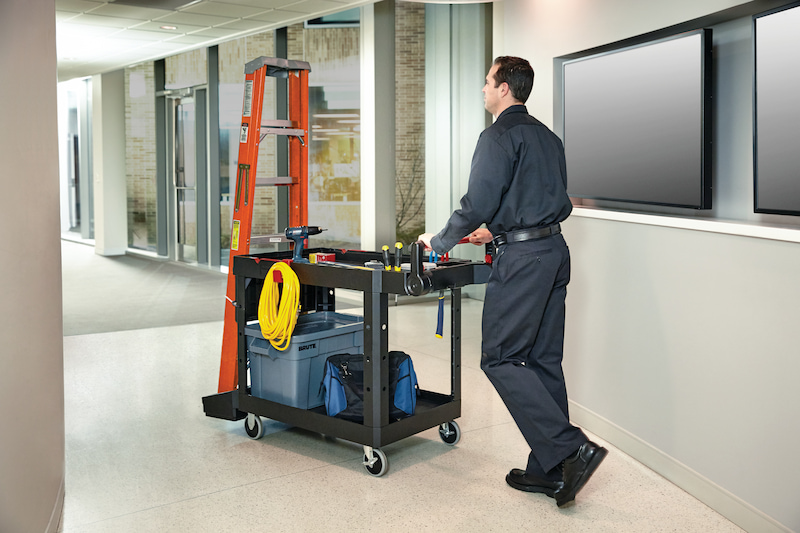
Heavy-duty utility carts solve this by letting one person transport tools, equipment, and supplies in a single run. Trolleys and utility carts designed for commercial environments can carry loads of 150 kg or more, reducing trips and physical strain for staff. Industrial platform trucks suited for warehouse settings can handle loads of 900-1,000 kg.
When you compare the cost of a durable utility cart against the hours lost to inefficient transport, the maths is simple. The cart pays for itself within weeks.
Not all utility carts are created equal. Choosing a heavy-duty utility cart that fits your environment means looking beyond the price tag. Here are the factors that matter most.
Load capacity is the first thing to check. Standard commercial utility carts support between 150 kg and 250 kg. Heavy-duty models built with structural foam or steel construction exceed 200 kg (around 450 lbs) and can hold up to 227 kg in some models.
Shelf design matters too. Lipped shelves feature raised edges, typically 7 cm to 10 cm deep, to prevent tools and small components from sliding off during movement. Flat shelves work better for oversized items that need easier loading. For most facilities, a mix of both options gives the most flexibility and storage capacity.
A balanced shelf layout also improves safety. Loading heavier items on lower shelves helps maintain stability and prevents tipping during transport.
Wheels make or break a utility cart's performance. TPR and PVC wheels are ideal for smooth indoor surfaces, while pneumatic or all-terrain tyres handle rough outdoor terrain. Most heavy-duty trolleys use a 4-castor system for 360-degree movement. Some models come with locking castors for added safety on inclines or uneven ground.
Non-marking swivel castors protect floors and walls from scuffs. This is essential for healthcare, hospitality, and aged care facilities where presentation matters.
Utility carts are commonly available in plastic, stainless steel, or powder-coated steel materials. Each has its place.
|
Feature |
Plastic (Structural Foam) |
Powder-Coated Steel |
|
Best for |
Wet environments, chemical exposure |
Hot tools, sharp components, heavy industrial loads |
|
Weight |
Lightweight, easy to manoeuvre |
Heavier, more rigid |
|
Rust resistance |
High |
Moderate (coating-dependent) |
|
Cleanability |
Easy to wipe down |
Requires more maintenance |
|
Typical use |
Healthcare, hospitality, offices |
Warehouse, industrial, maintenance |
Plastic utility carts made from structural foam or polypropylene are lightweight and easy to clean. They resist chemicals and moisture, making them well-suited for healthcare and hospitality settings. Steel utility carts handle heavier industrial loads with greater durability and higher load capacity.
Ergonomic handles on utility carts reduce manual handling strain and improve user control during transport. Variable grip-height handles allow workers of different heights to push the cart comfortably. This is a small detail that makes a big difference in workplace safety and daily comfort.
Utility carts are used across a full range of industries. Their versatility makes them essential material handling equipment for diverse needs, from transporting medical supplies in a hospital to moving stock in a warehouse.
Healthcare and Aged Care: Trolleys carry medical supplies, linens, and cleaning supplies between rooms and floors. Quiet castors and non-marking wheels keep noise low and protect sensitive environments. Carts can be configured with open shelves or secure storage to meet infection control requirements.
Hospitality: Hotels and resorts use utility carts for room restocking, linen delivery, and maintenance runs. A durable, heavy-duty utility cart reduces the number of trips housekeeping staff make per shift, directly improving efficiency. An efficient restocking process means rooms turn over faster and guests notice a higher standard of service.
Education and Commercial Offices: Schools, universities, and offices rely on utility carts to transport tools, documents, and equipment between buildings. Lightweight models suit everyday transport tasks, while heavier steel options support facilities teams managing maintenance across large campuses.
Warehouse and Industrial Sites: In warehouse and industrial environments, heavy-duty trolleys handle the heaviest loads. Steel-framed carts and hand trucks support fast-paced material handling where durability and high load capacity are non-negotiable. These carts are built for the job, reducing downtime and keeping operations moving.
When choosing a utility cart, match the cart to your main use case. Here is a quick reference for the most important factors to consider.
Weight capacity: Will it handle your heaviest regular loads?
Number of tiers: Two-tier for heavy loads, three-tier for lighter supplies and tool storage.
Shelf type: Lipped to prevent sliding, flat for bulky items.
Material: Plastic for wet or chemical environments, steel for heavy industrial use.
Wheels: Indoor-only (TPR/PVC) or mixed-terrain (pneumatic).
Ergonomics: Adjustable handles to reduce strain and improve control.
Dimensions: Will it fit through your doorways and into your lifts?
|
Light-Duty Utility Carts |
Heavy-Duty Utility Carts |
|
|
Load capacity |
Up to 150 kg |
200 kg – 300 kg+ |
|
Materials |
Plastic, lightweight composites |
Structural foam, powder-coated steel |
|
Best for |
Offices, education, hospitality |
Warehouse, industrial, healthcare |
|
Durability |
Moderate |
High (built for rigorous daily use) |
|
Shipping weight |
7–14 kg |
14–19 kg+ |
|
Typical use |
Every day transport of supplies |
Transporting heavy materials, equipment, and tools |
Lighter-duty utility carts work well for everyday tasks in offices and education. Heavy-duty models are the better choice for facilities that need higher load capacity and long-term durability across demanding commercial or industrial settings.
For multi-site operations, standardising on a single range of heavy-duty utility carts creates real advantages. Staff transferring between sites already know the equipment. Replacement parts and accessories are interchangeable. Training time drops. And bulk purchasing often unlocks better shipping and sale pricing from your supplier.
Look for a supplier in Australia that offers a full range of models in stock, with fast delivery and flexible shipping options. Adaptable utility carts that support different shelf configurations are especially useful for organisations with diverse site requirements. One cart model that can be configured for healthcare, hospitality, or commercial use simplifies procurement and reduces waste.
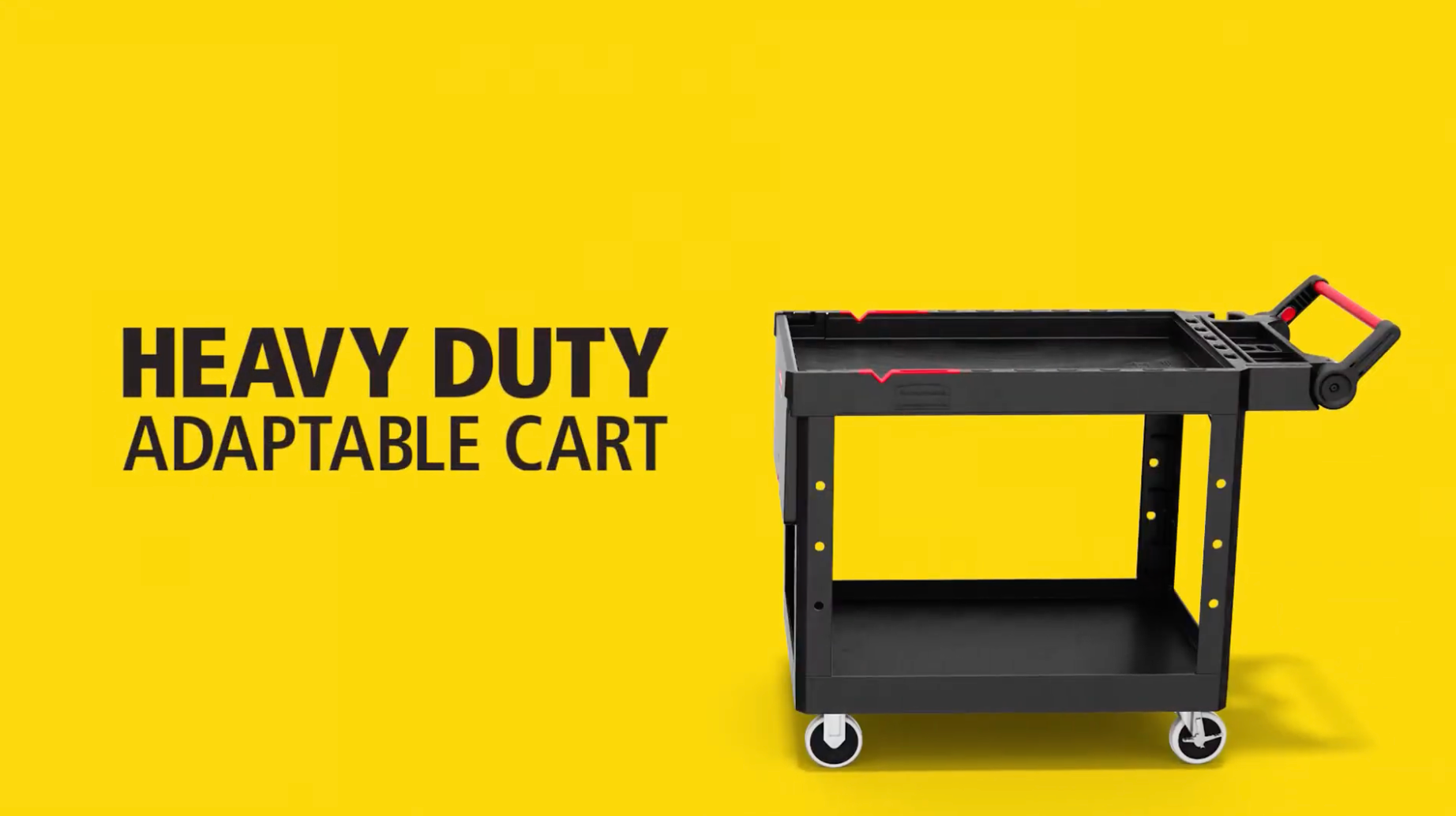
The Heavy Duty Adaptable Utility Cart is built for exactly this kind of versatility. It features an ergonomic adjustable handle with four grip-height positions, a flip-up shelf that creates instant workspace without clearing the top tier, locking castors for stability, and built-in storage slots for small tools and hardware. Snap-in hooks provide extra capacity for extension cords and other items, so staff can carry everything they need in a single trip.
Utility carts come in several styles, including open-shelf trolleys, enclosed carts with secure storage, platform trucks, and tiered models. Some are also referred to as trolleys or material handling carts, depending on the industry. Each type is suited to different tasks, from transporting heavy materials on a warehouse floor to organising cleaning supplies in hospitality.
The most critical factors are weight capacity, material construction, shelf design, and wheel type. A heavy-duty utility cart should have a load capacity of at least 200 kg and be built from durable materials such as structural foam or powder-coated steel. Ergonomic handles and locking castors add safety and comfort for daily use.
Yes. Heavy-duty utility carts allow workers to move multiple tools, supplies, and equipment in a single trip. This reduces repetitive manual carrying, which helps reduce strain and lower the risk of musculoskeletal injuries. Smooth rolling wheels and ergonomic handles also improve control during transport.
A 3-tier trolley provides multiple shelves for organising and carrying smaller items such as cleaning supplies, tools, and medical supplies. It is well-suited to environments where workers need to carry a range of items in a single trip, making it a practical option for tool storage and daily restocking.
It depends on the wheel type and material. Carts with pneumatic or all-terrain wheels handle rough outdoor terrain well. Structural foam construction resists rust and weather exposure better than untreated steel. For mixed indoor and outdoor environments, choose a cart with non-marking swivel castors and a durable, weather-resistant frame.
The right heavy-duty utility cart removes friction from the tasks your teams repeat every day. It keeps materials, tools, and supplies moving safely through your facility. It reduces strain on workers and helps improve efficiency across every shift.
Explore the full range of heavy-duty utility carts and material handling equipment to find the right fit for your site. Request a quote or contact your supplier to discuss volume pricing and shipping options across Australia.