|
Quick Answer: Bucketless mopping replaces the traditional mop and bucket with a self-contained spray mop system. The mop carries its own cleaning solution onboard, dispenses it through a trigger handle, and uses a microfibre pad to wipe surfaces. Cleaners cover more ground per shift, skip dirty water entirely, and lower the risk of cross-contamination. |
The mop head and bucket have been the default for commercial cleaning for decades. That is starting to change. Bucketless mopping systems are reshaping how facilities approach floor care, and the shift is being driven by real operational pressure.
Cleaning teams are working under tighter time windows, higher hygiene expectations, and growing staff shortages. With 61% of janitorial companies naming labour shortages as a major obstacle to growth in 2025, every minute saved on a workflow now counts. Bucketless mopping is one of the most practical responses to that pressure.
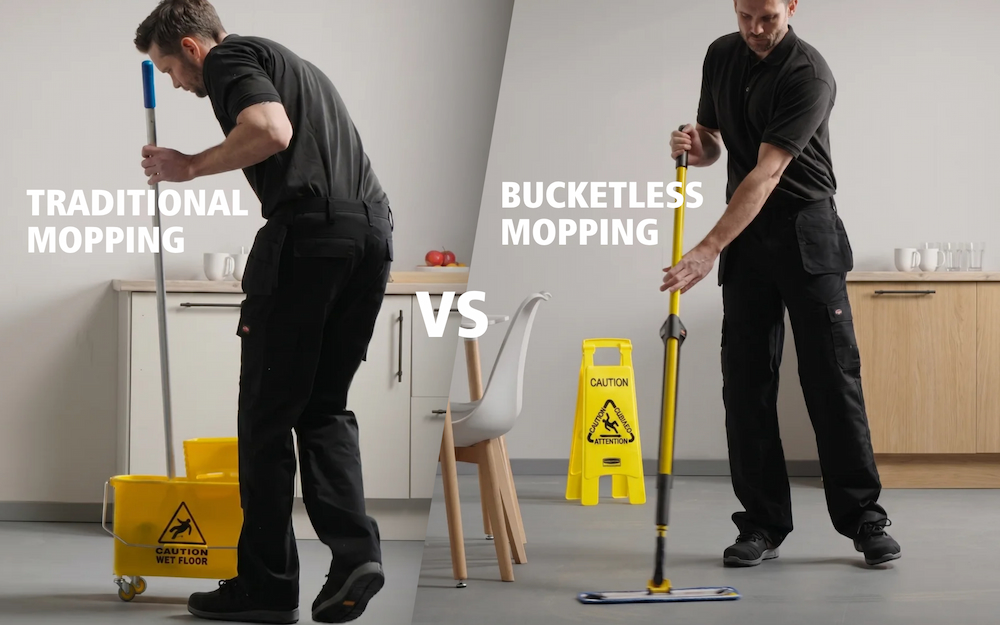
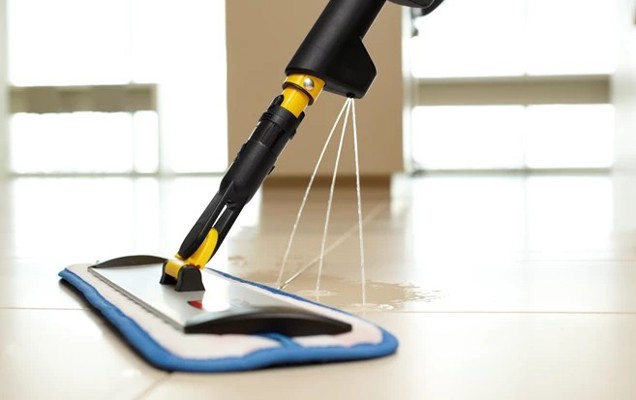
A bucketless mop carries cleaning solution on board and sprays it directly onto the floor, so there is no refill bucket to manage.
Mopping accounts for a large share of working time in commercial cleaning, so workflow changes here have an outsized impact.
Most cleaning professionals already recognise that traditional mops and buckets can spread soil between zones.
Our HYGEN PULSE Microfibre Spray Mop holds 0.6L of solution and cleans up to 79m² per fill, at a loaded weight of just 2.8kg.
Bucketless systems work best for daily maintenance, spot cleaning, high-risk areas, and small to mid-sized commercial spaces.
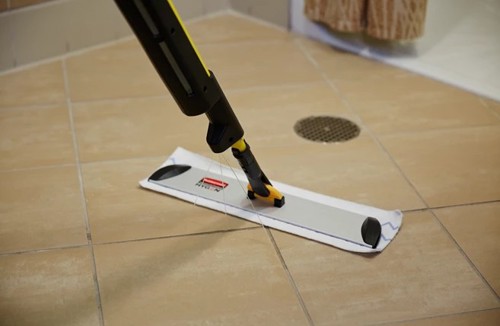
A bucketless mop is a flat mop system that holds cleaning solution inside the handle. The cleaner pulls a trigger to spray the solution onto the floor, then wipes the area with a microfiber pad attached to the mop frame. No bucket. No refilling between rooms. No dirty water is dragged through the facility.
Our HYGEN PULSE Microfibre Spray Mop is built around this idea. The onboard reservoir holds 0.6L of liquid, and the trigger handle dispenses three even sprays per pull. The mop weighs only 2.8kg when fully loaded, so it stays easy to manoeuvre across a long shift.
You will find the full range on our mopping systems page, which covers bucketless options, charging buckets, and traditional setups for heavy-duty work.
The mechanics are simple. Fill the onboard tank with floor cleaner or water. Attach a clean microfibre pad to the frame using the hook-and-loop backing. Squeeze the trigger to spray solution ahead of the pad. Wipe in a figure-8 motion across the surface.
When the pad is saturated or visibly soiled, swap it for a fresh one. The used pad goes into the laundry bag and a clean one comes out of the charging bucket. That swap is the heart of the workflow change. Traditional mopping dips a dirty mop back into a single bucket of water. Bucketless mopping keeps clean solution and dirty pads completely separate.
|
Factor |
Traditional mop and bucket |
Bucketless spray mop |
|
Water source |
Shared bucket, refilled per area |
Onboard reservoir, 0.6L lasts up to 79m² |
|
Cross-contamination risk |
High; pad re-enters dirty water |
Low; pads swapped clean between zones |
|
Loaded weight |
Wet string mops can triple in weight |
2.8kg, consistent across the shift |
|
Refill workflow |
Stop, empty, refill, return |
Spray and continue |
|
Best fit |
Heavy spills, large open floors |
Daily maintenance, high-risk areas, small spaces |
The shift to bucketless systems is not just about new gear. It tracks four real changes in how commercial cleaning is measured: productivity, hygiene risk, worker safety, and sustainability. Each of these pressures is pushing facilities to rethink what a mop should do.
Floor cleaning eats up a huge share of labour hours. Mopping accounts for 35 to 40% of working time on most commercial cleaning jobs, so anything that compresses that share gives back real hours to the day. A bucketless spray mop removes the walk back to a sink or service room every few rooms. The onboard reservoir on our PULSE Mop covers 79m² before a refill, which is meaningful for teams running tight-scheduled cleans across schools, offices, and retail floors.
Cross-contamination is no longer a fringe concern. Around 97% of cleaning professionals already recognise that mops and buckets can spread soils, and the stakes are highest where pathogen control is non-negotiable. Floors play a bigger role than most people assume. Over 90% of airborne microorganisms in buildings come from resuspension off floors and other surfaces.
Our HYGEN microfibre wet pads remove 99.7% or more of tested pathogens with water alone, and our disposable HYGEN microfibre pads remove 99.99% of common tested viruses. Pair those pads with the bucketless PULSE system and dirty water never re-enters the clean cycle. The wider HYGEN equipment range is built around that same principle.
Ergonomics is a quiet but expensive issue. Traditional wet string mops can triple in weight once saturated, which puts repeated strain on shoulders, wrists, and lower backs. Repetitive stress injuries cost an average of 18 lost work days per injury, so the math on lighter tools adds up quickly.
A loaded PULSE mop weighs 2.8kg and stays at that weight all shift, since the reservoir empties evenly rather than soaking heavier. That means less swinging, less wringing, and fewer awkward bends over a bucket.
Sustainability targets are tightening across commercial facilities. Microfiber mopping with our HYGEN system can reduce water and chemical consumption by up to 95% compared to traditional methods. Bucketless mopping extends that benefit because nothing is wasted on filling and dumping. The cleaner uses only what the floor needs.
Bucketless systems shine in daily maintenance and high-touch routes. The right fit depends on the type of facility, the size of the cleaning area, and the level of hygiene risk involved.
Healthcare facilities are an obvious match because pad-swapping between rooms blocks the chain of cross-contamination. Schools benefit from the speed during short cleaning windows. Offices and retail floors stay cleaner during business hours because there is no bucket to wheel through public areas. Pair the bucketless setup with one of our cleaning carts and the workflow becomes a true mobile cleaning station.
Smaller jobs gain the most. Spill clean-ups, touch-up mopping, and quick passes through breakrooms and toilets are faster with a spray-and-wipe system than with a full mop and bucket setup. Heavy-duty cleaning on large open floors will still call for a traditional bucket or a scrubber, so most facilities run both side by side.
Two questions guide the choice: how much floor area you cover each day, and how strict your hygiene requirements are. The answers shape which mop, frame, and pad combination will give you the cleanest workflow.
For most facilities, the HYGEN PULSE Microfibre Spray Mop Kit is the practical entry point. It comes with the trigger handle, frame, and reservoir ready to go, and accepts our full range of HYGEN microfibre wet pads, scrubber pads, and disposable pads.
High-volume teams should look at the PULSE Caddy hose connection for automatic refills. Another option is to pair the system with a HYGEN charging bucket that holds up to 20 pre-loaded wet pads. For sites that require single-use applications, our HYGEN disposable microfibre range delivers up to twice the cleaning coverage per pad compared with reusable equivalents. Our reusable HYGEN microfibre pads withstand up to 500 commercial launderings, keeping cost-in-use low over time.
The technique matters as much as the tool. A bucketless mop only delivers its full benefit when used in the right sequence, with pad swaps between zones to prevent dragging soil from one area into the next. The checklist below covers the full workflow.
Clear the floor. Check for loose debris and remove it with a dust pad or scraper.
Place safety signs. Set wet floor signs at room entries before you start.
Fill the reservoir. Add your chosen cleaning solution to the onboard tank and screw the cap closed.
Attach a fresh pad. Press a clean microfibre pad onto the hook-and-loop frame.
Start at the far end. Begin mopping at the point furthest from the door and work backwards.
Spray and wipe. Pull the trigger to dispense solution ahead of the pad and mop in a figure-8 motion.
Swap pads between zones. Change pads when they stop gliding smoothly, before moving into a new high-risk area, or when visibly soiled.
Refill as needed. Top up the reservoir manually or via the PULSE Caddy hose.
Send used pads to laundry. Drop reusable pads into the laundry bag for washing, or bin disposable pads.
Floor care should not be the slowest part of your shift. The bucketless system you choose today decides how much time your team spends cleaning floors versus managing water for the next five years. Our HYGEN PULSE Microfibre Spray Mop is built for that decision, with the lightweight handling, onboard reservoir, and microfibre pad compatibility that turn floor care from a bottleneck into a benchmark.
Browse the full HYGEN PULSE kit, charging buckets, and microfibre pad options on our site, or reach out to our team for a recommendation tailored to your facility. The mop and bucket had a good run. It is time to put it down.
You use a bucketless spray mop. The cleaning solution sits in an onboard reservoir built into the handle, and a trigger releases a measured spray onto the floor in front of the microfibre pad. You wipe in a figure-8 motion and swap the pad for a clean one when it gets saturated. No bucket, no dirty water, no wringing.
For daily maintenance and high-risk areas, microfibre flat mops are the most efficient option. They cover more square metres per pass than string mops, hold their weight evenly, and lift more soil per stroke. Bucketless versions like our PULSE Mop go further by removing the bucket from the workflow entirely.
The PULSE Mop holds 0.6L of solution in its onboard tank. That is enough to clean up to 79m² of floor before a refill, which covers a meaningful chunk of most routes. To refill, you can unscrew the cap manually or connect to the PULSE Caddy hose for an automatic top-up.
For light to mid-duty cleaning, yes. Pair the PULSE Mop with a HYGEN microfibre wet pad that has a built-in scrubber, and it will lift most stuck-on dirt, tile grout grime, and dried spills. For very heavy-duty deep cleaning across large open spaces, a traditional mop and bucket or a walk-behind scrubber will still be the better tool.
Yes. Our reusable HYGEN microfibre wet pads are built to withstand up to 500 commercial launderings, and up to 200 launderings with bleach per CDC guidelines. That long service life keeps cost-in-use low and supports colour-coded systems that help reduce cross-contamination between zones.