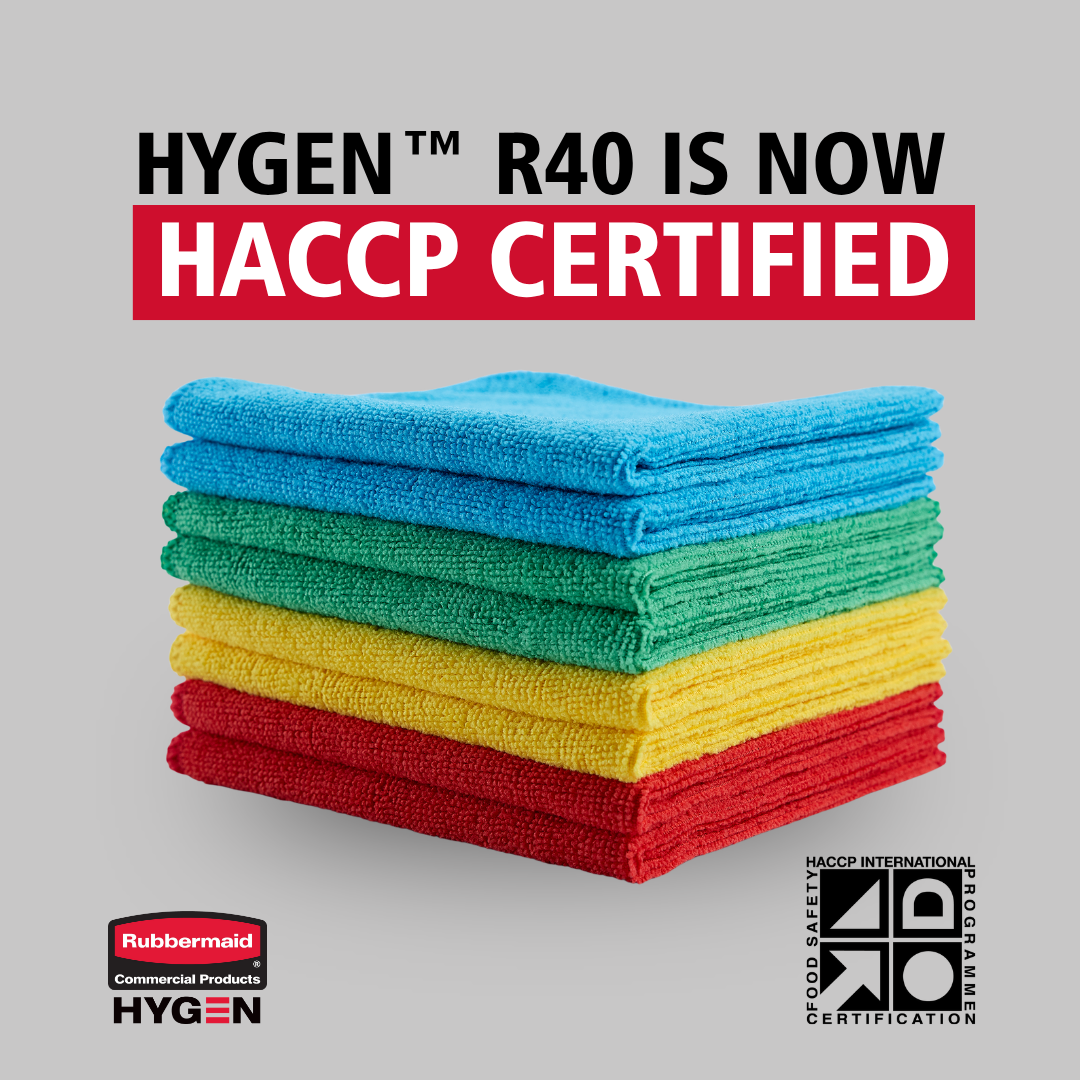
Quick Answer: HACCP certification confirms that a cleaning product meets recognised food safety standards. For cleaning cloths used near food, it signals controlled production and reliable hygiene performance. The HYGEN R40 Microfibre Cloth is HACCP-certified. This makes it a trusted choice for commercial kitchens, foodservice teams and hospitality operators who need quality cleaning materials they can stand behind. |
Food safety carries real weight in Australia. Foodborne illness affects around 4.7 million Australians each year. The Food Standards Australia New Zealand puts the economic cost at roughly $3 billion AUD. Behind those numbers sit benches, fridges and prep zones that need consistent hygiene every shift. The cloths used to clean those surfaces shape the outcome more than most people realise.
This article explains what HACCP certification means for cleaning products. It also demonstrates how the HYGEN R40 Microfibre Cloth builds confidence in food safety.
HACCP certification confirms that a cleaning product meets recognised food safety standards.
The HYGEN R40 Microfibre Cloth is HACCP-certified and ideal for commercial kitchens, foodservice, and hospitality.
Made with 40% post-consumer recycled polyester, the R40 reduces reliance on virgin plastics without losing performance.
It removes 99.9% of tested fungi and bacteria using only water, supporting lower chemical use near food.
The R40 endures 200 commercial washes and holds colour coding across its lifetime for reliable cross-contamination control.
Food safety starts well before a plate reaches the table. It runs through every bench, chopping board and fridge handle in the kitchen. Surfaces, cleaning tools and consistent hygiene routines all shape the final outcome. A clean kitchen is only as reliable as the cloths and processes behind it.
The scale of the problem in Australia tells the story. Foodborne illness sends around 47,900 Australians to hospital each year, with 38 deaths and millions more cases handled outside the hospital system. Microbiological issues are a major driver. About one-third of food recalls in Australia stem from microbiological causes, with Listeria appearing in nearly half of those cases.
Cross-contamination is a real risk across foodservice, QSR and hospitality. Catering teams and shared food prep areas face the same challenges every shift. Allergens, bacteria and food residue can travel on poorly chosen cloths. A wipe that looks clean may still carry microbes from a previous task. This is why many operators now treat cleaning materials as part of their food safety programme.
Daily wiping, spill response and bench sanitising all depend on the right tool for the surface. The wrong cloth can spread contamination across a prep zone in seconds. The right cloth helps protect customers, staff and brand reputation. Smart operators choose cleaning wipes designed for food-contact zones, with the durability to perform shift after shift.
HACCP stands for Hazard Analysis and Critical Control Points. It is a globally recognised food safety framework used by regulators and food businesses worldwide. The system identifies hazards across food production and handling. It then sets controls to keep those hazards in check at each critical step.
HACCP is widely adopted across the USA, Europe and Australasia. Many leading Australian food businesses in retail, service and manufacturing now demand HACCP certification from their suppliers. When a commercial cleaning product carries HACCP certification, the item has been assessed against recognised food safety principles. The certification provides credibility for buyers who need quality cleaning materials approved for food-related environments. It also signals that the product is suited to use around food preparation surfaces and food contact zones.
For procurement teams, HACCP certification removes guesswork. It gives a clear, documented answer to a basic question. Is this product safe to use where food is prepared? A certified product carries that confidence built in. This matters for audits, supplier reviews and internal quality checks. It also matters for multi-site operators who need a standard answer across every kitchen.
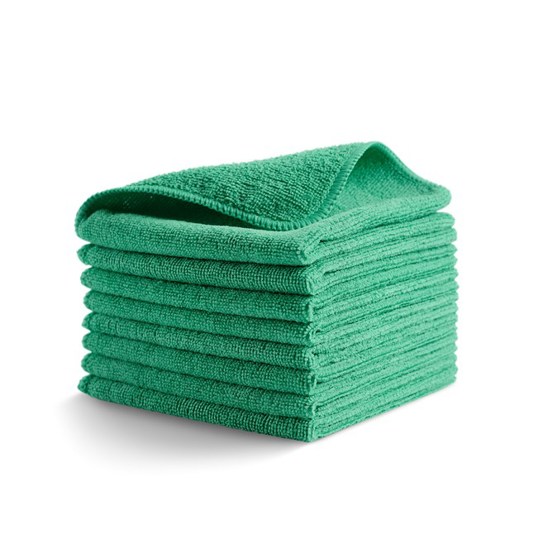
The HYGEN R40 is a practical everyday cleaning cloth built for food-related and commercial environments. It is HACCP-certified, making it ideal for kitchens and hospitality settings where food safety standards apply. The R40 sits within the wider HYGEN line, bringing together hygiene performance and recycled content in a single cloth.
The R40 is made with 40% post-consumer recycled polyester. Rubbermaid Commercial Products repurposes plastic bottles to reduce reliance on virgin plastics. This gives operators a more responsible cleaning option without losing performance. The cloth removes 99.9% of tested fungi and bacteria using only water. That supports cleaner kitchens with fewer chemicals on food-contact surfaces.
Durability is another strong point. The R40 is built to handle up to 200 commercial washes and 100 with bleach. This suits high-turnover laundry cycles in busy venues. Its advanced warp-knit microfibre is split into 16 filaments, with an over-95 % split ratio. The result is more surface area to trap dirt, grease and microbes during everyday cleaning. Stay-true colours hold up through wash cycles. This means the colour-coded cleaning stays consistent throughout the cloth's lifetime.
The R40 works wet or dry. This makes it perfect for damp wiping, polishing, dry dusting and general cleaning across the day. The lightweight build helps staff move through tasks quickly without arm fatigue. For more on the wider range, see the HYGEN launderable microfibre collection.
The R40 suits a wide range of settings where food safety and cross-contamination control matter most. Below are the environments where this cloth delivers the strongest value.
Commercial kitchens. Wipe down prep benches, stainless steel surfaces and cooking equipment. The cloth holds up under repeated wash cycles. It also keeps its grip on dirt and grease across long service shifts.
Foodservice and QSR. Quick-service restaurants need to clean quickly between rushes. The R40 handles wet spills, crumbs and bench cleaning without slowing the team down. Its durability suits the high turnover of busy QSR sites.
Hospitality. Hotels, pubs and venues use the R40 across kitchens, bars and back-of-house. Colour-coded cloths help staff move between areas without spreading contamination.
Facility cleaning teams. Contract cleaners working across sites need cloths that perform the same way every shift. The R40 delivers consistent results across diverse cleaning tasks.
Staff rooms and shared food prep areas. Office kitchens, break rooms and shared microwaves all need food-safe cleaning. The R40 is a dependable answer for general cleaning in these zones.
Not every microfibre cloth is built the same. When choosing cleaning wipes for food contact zones, a few details separate a reliable cloth from a weak one. The stakes are real, given that Australia averages around five food recalls every month.
Certification and compliance credibility. A HACCP-certified cleaning cloth like the R40 gives buyers documented proof that the product meets recognised food safety standards. This supports audits and supplier reviews. It also gives kitchen managers a quick answer when staff ask whether a cloth is approved for food prep surfaces. Under state food acts, food safety breaches can attract penalties of up to $44,000 per offence. Cleaning credentials carry real weight when audit time comes around.
Microfibre performance. Look for split fibre construction with a high splitting ratio. The R40 reaches over 95%, which lifts more dirt and bacteria from surfaces. Cleaning with water alone becomes more practical, which reduces chemical use near food.
Durability and reliability. Cloths that fade, fray or shed early waste money. The R40 lasts up to 200 commercial launderings. The cost per use stays low. Stay-true colours protect colour coding even after many washes. Stronger cloths are also less likely to leave lint on food-contact surfaces.
Ease of standardisation across sites. Multi-site operators need cleaning materials that travel well. The R40 provides a consistent solution that suits a wide range of surfaces and tasks. A single product across the network simplifies stock control, training, and audit reporting.
HACCP stands for Hazard Analysis and Critical Control Points. It is a globally recognised food safety framework. The system identifies hazards and sets controls across food handling and related products. A HACCP-certified product has been assessed against these food safety principles and is suited to food-related environments.
Foodservice cleaning happens close to food. The cloths and tools used near food contact zones can carry contamination if not properly managed. HACCP-certified cleaning products give operators documented confidence. They meet food safety standards suitable for kitchens and food preparation areas.
Yes. The HYGEN R40 Microfibre Cloth is HACCP certified. This makes it ideal for commercial kitchens, foodservice and QSR. It also works well in hospitality and shared food prep zones. The cloth is built for daily cleaning across a range of food-related surfaces.
The HYGEN R40 is made with 40% post-consumer recycled polyester. Rubbermaid Commercial Products repurposes plastic bottles to create the fibres. This reduces reliance on virgin plastics. The result is a more responsible cleaning option without losing durability or performance.
Microfibre uses tiny split fibres to trap dirt, grease and microbes during wiping. The HYGEN R40 has over 95% splitting ratio. That gives more surface area for cleaning. This helps remove 99.9% of tested fungi and bacteria using only water, supporting cleaner kitchens with fewer chemicals.
Food safety depends on the quality of every cleaning tool in the building. The HYGEN R40 Microfibre Cloth gives commercial kitchens, foodservice operators and hospitality teams a HACCP-certified solution built for daily use. Explore the wider HYGEN range to find the right colour-coded mix for your sites. You can also browse the full cleaning range for more tools that support food safety and cross-contamination control.