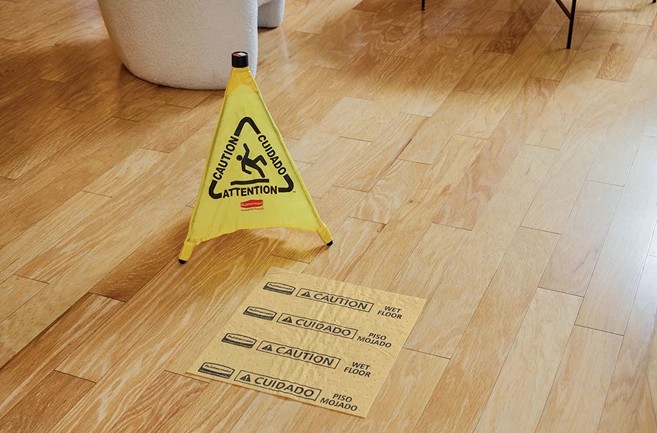
Quick answer: Effective commercial spill management means having the right equipment within reach, a clear procedure and a trained team. Identify the liquid, alert nearby people, stop the source, then contain, clean up, and dispose. Absorbent spill pads are suitable for small water and oil spills; hazardous spills require a dedicated response. |
Commercial spill management refers to the equipment, procedures, and training a facility relies on to handle spills safely and quickly. It applies to everything from a dropped drink in a retail aisle to a chemical leak in a storeroom, and the right response depends on what has spilled and how much.
For facility managers, a spill is first a workplace safety issue. Safe Work Australia reports 32,000 workers' compensation claims for serious injuries from slips, trips and falls in 2024–25. Not all of these involve spills, but wet and contaminated floors are a well-known cause.
Spills also affect daily operations. A slow response can close an aisle, disrupt service or increase cleaning time, so a fast response helps minimise downtime. Some liquids pose an additional risk: oil, fuel, and chemicals that reach a drain can cause environmental contamination.
This guide covers common spill hazards, the steps to follow and how to choose the right equipment for your site.
Match your spill response to the type of liquid and the volume spilled.
A warning sign alerts people to a hazard, but it doesn't remove the hazard.
Keep spill response equipment close to where spills are most likely to occur.
Absorbent spill pads are suited to small water and oil spills. Larger or hazardous spills need dedicated equipment.
Blood and bodily fluids should be managed in accordance with your facility's infection control procedures.
Spills can occur in almost any commercial site, but the hazards vary by environment. Knowing your likely spills is the starting point for choosing the appropriate equipment.
In supermarkets and retail stores, common spills include dropped bottles, leaking produce and water around refrigerated displays. In busy hospitality venues, kitchens deal with cooking oil and water, while front-of-house teams manage drinks and melted ice.
Property and facility managers often deal with slow leaks, drips from equipment and wet entrances across multiple sites. In commercial workplaces, spills tend to occur around kitchenettes, water dispensers, washrooms and building entrances, while commercial cleaning teams also need a plan for chemical spills in cleaning stores.
In hospitals and healthcare facilities, water leaks and general spills in corridors, service areas and back-of-house spaces can create the same slip hazards found in other commercial buildings.
Important: Blood and bodily fluid spills are different. Follow your facility's infection control procedures and relevant health guidance. Do not treat them as general spills.
These steps provide your team with a simple structure for handling general spills. Always follow your site procedures and the product's Safety Data Sheet (SDS). If a spill is hazardous or too large to manage safely, treat it as a spill emergency: move people away and call for trained help.
Assess the spill. Identify the liquid, estimate its volume, and look for immediate risks, such as drains, electrical equipment, or ignition sources.
Secure the area. Alert people nearby and keep them away. Use warning signs or barriers, and wear the required personal protective equipment (PPE).
Control the source. If it is safe, stop the leak and turn off the valve, or stand the container upright.
Contain the spread. Stop the liquid from reaching drains and walkways. For small spills, an absorbent pad can cover the liquid straight away.
Clean up. Absorb the liquid, then clean and dry the floor before reopening the area.
Dispose of used absorbents. Bag and dispose of used absorbents according to your waste management procedures, the SDS and local regulations.
Report and restock. Record the spill, investigate the cause if needed and replace any equipment you used.
A warning sign is an important control, but it may not be enough on its own. In one NSW Court of Appeal decision, a supermarket was found negligent despite placing three yellow warning signs around a wet floor. The majority found that a staff member should also have stayed to direct customers away.
Every case depends on its facts, and this isn't legal advice. The practical lesson is to avoid leaving a spill unattended where possible. Cover the liquid, post a sign, keep someone nearby, or restrict access with a mobile safety barrier until the floor is clean and dry.
The right equipment depends on what could spill on your site and how much. Many commercial facilities need everyday tools for small spills, while sites that store larger volumes or hazardous liquids need spill kits and trained responders.
High-risk industries such as manufacturing and transport may need a more detailed plan for fuel leaks, chemical spills, and spill containment. If you handle hazardous chemicals, check Safe Work Australia's code of practice and your state or territory requirements.
Access matters too. Equipment should be easy to reach during every shift, clearly identified, and stored near likely spill points. Good storage supports rapid deployment and reduces the likelihood that staff will leave a hazard unattended while searching for supplies.
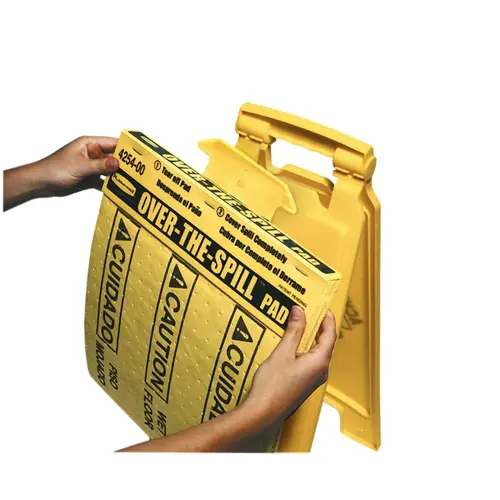
Absorbent spill pads provide staff with a quick way to handle small liquid spills. Our Over The Spill pads soak up water and oil, and they don't need pre-soaking to clean up water spills.
The pads do more than absorb. Each one is bright yellow and carries a universal caution symbol and the "Caution Wet Floor" message, so it also alerts nearby people. They are made from melt-blown polypropylene for added strength and absorbency.
They can also be placed in areas prone to leaks until the problem can be serviced. This makes them useful for facility teams managing drips between maintenance visits.
As a guide, a 1L spill may require at least 3 large pads, and a 2L spill at least 6. A full pack of 22 holds about 7.7L at maximum capacity. Keep extra pads on hand, as results depend on the liquid and the surface.
Work through these steps when comparing spill management products for your facility:
List the liquids on site. Start with your SDS register, then check that the product is suitable for each liquid.
Estimate your largest likely spill. Compare this volume with the product's stated absorbency.
Assess foot traffic in each area. Choose visible products that also warn people of the hazard in high-traffic areas.
Choose a storage location. Select a format that suits the space, such as a mounted dispenser or a pad tablet attached to a floor sign.
Train your team. Show staff when to use the product and when to escalate the spill.
Plan disposal and restocking. Set a process for the safe collection of used absorbents, and check stock levels regularly.
A good procedure should work during your busiest shift, not just on paper. Safe Work Australia's slips and trips guidance includes establishing procedures for reporting and cleaning spills, and cordoning off wet floors during cleaning. These steps can help strengthen your approach:
Map your hot spots. Use incident records and site walks to identify where spills most often occur, then place equipment nearby.
Schedule floor inspections. Set clear inspection times and responsibilities. An ACT appeal court decision found an informal "clean as you go" system, with no dedicated staff member or timed inspections, was not enough.
Train every shift. Include casual staff and contractors. Everyone should know how to assess a spill, where equipment is kept and who to call.
Keep a spill log. Record the location, liquid and response so you can identify patterns and address root causes.
Check equipment regularly. Include spill pads, signs, barriers and PPE in routine stock checks.
Spill management works best as part of a wider cleaning routine. Regular workplace housekeeping helps keep floors clear, makes hazards easier to spot and supports safer, cleaner environments for staff and visitors.
Spills can't always be prevented, but your response can be planned. With the right equipment, clear procedures and regular training, your team can respond quickly and keep people safe.
For everyday spills, our Over The Spill pads help you absorb the liquid and alert people nearby in one step. Discover RCP's commercial spill management solutions, or contact our team for expert advice on the right products for your facility.
The best approach to commercial spill management is to plan before spills happen. Identify the liquids on your site, keep the right equipment within reach and train your team to respond safely. When a spill occurs, assess it, secure the area, control the source, contain it, clean up, dispose of waste and report it. A rapid response is essential for workplace safety and helps protect your operations. Review your spill control procedures regularly against your site's safety standards.
Absorbent spill pads are used to soak up small liquid spills before they spread. Our Over The Spill pads absorb water and oil, and their bright yellow design and cautionary message also alert nearby people. They suit general spills where a fast response is critical, but they don't replace spill response kits. A large oil spill or fuel spill needs dedicated equipment and a trained team.
It depends on your risks. Everyday spills may need absorbents such as spill pads, plus warning signs, barriers, gloves and cleaning tools. A business with larger spills may need general-purpose spill kits, personal protective equipment, and waste disposal bags. In high-risk industries and industrial sites, the appropriate equipment may include oil and fuel kits that absorb hydrocarbons, chemical spill kits and containment booms. Store the appropriate kit near the hazard to enable rapid deployment in a spill emergency.
Start by mapping where spills most often occur. Then schedule floor inspections, train every shift, keep a spill log, and check your spill-response equipment regularly. Clear training and reporting can also support compliance with your WHS obligations. On the other hand, a spill containment plan supports environmental protection by helping to keep liquids out of drains and reducing the risk of environmental contamination.
Consider the liquids on site, the largest likely spill, foot traffic, storage location and staff training. Check that the product suits the liquid, as a product suited to water may not be safe for fuel, acids, or other chemicals. Choosing the right spill kit or absorbent also means planning for the safe collection of used absorbents, with waste disposal handled in accordance with your waste management procedures. If you're unsure, seek expert advice on the correct product for your environment.
The Three Cs are control, contain and clean up. Control stops the source, contain limits the spread, and clean up removes the liquid and any contaminated material. On higher-risk sites, containment booms can help keep liquids away from drains and protect the environment, provided staff have the training to use them safely.
Don't assume so. Check the SDS and product information before using any absorbent on a chemical. Use a dedicated chemical spill kit for chemical spills involving hazardous or unknown liquids. Manage blood and bodily fluids under your infection control procedures, not as general spills.