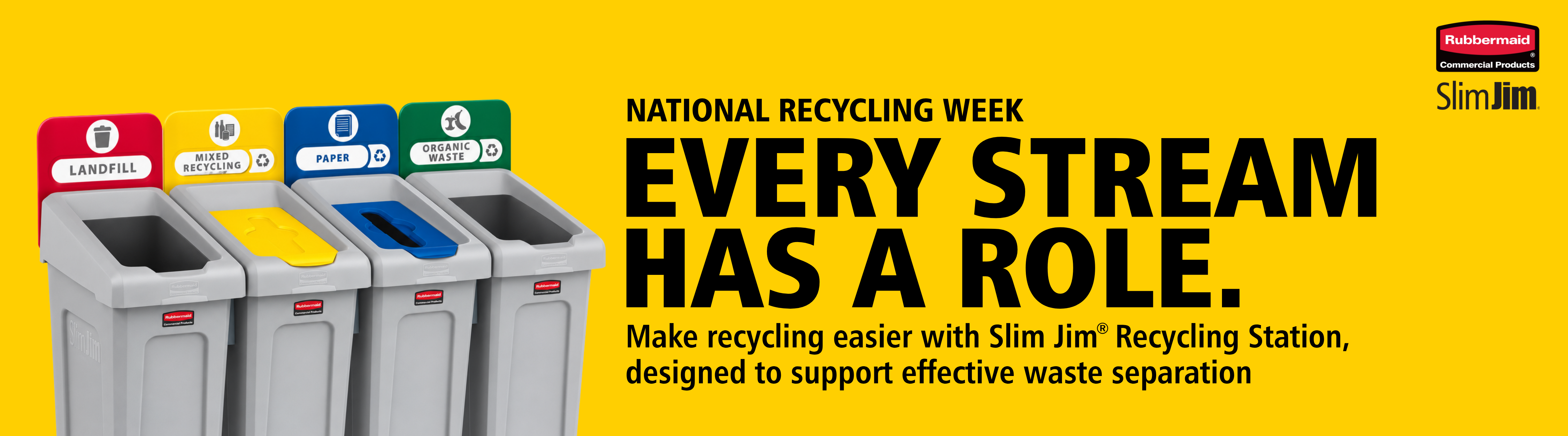
Quick answer: National Recycling Week (9th – 15th of November) is an opportunity for businesses to review how they separate recyclable materials from general waste. Clear waste streams, consistent signage and accessible collection points make everyday disposal decisions easier. RCP Slim Jim® Recycling Stations bring these elements together in a configurable commercial system. |
Every day, people make split-second decisions about where to put paper, bottles, packaging and general waste. The success of a recycling program often depends on what happens at that moment: can the person quickly identify the correct stream? National Recycling Week is a timely reason to look beyond the recycling message and examine the infrastructure behind it. For businesses, that means designing a system people can understand and cleaning teams can service.
National Recycling Week encourages Australians to think about reducing, reusing and recycling. For commercial facilities, it is a useful opportunity to review existing collection points, ask staff where sorting is confusing and check which materials the local waste contractor accepts. The objective is not simply to add more bins; it is to make each stream clear, convenient and consistent.
Start with a basic waste review: what materials are generated, where do they accumulate, and where do incorrectly sorted items appear? A recycling system should reflect those actual patterns rather than assuming that every site needs the same configuration.
Learn more about National Recycling Week and local recycling guidance.
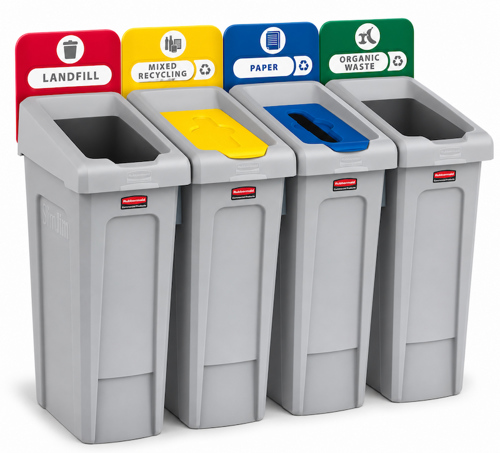
Slim Jim® Recycling Stations combine containers, lids and waste-stream identification into a modular collection point. Instead of treating each bin as an unrelated object, facilities can build a recognisable station that gives users clear disposal choices. The system can be configured for the streams available at a site, with matching lid colours, openings and labels.
The Slim Jim® Recycling Station Starter Kit provides a foundation for building a station, while compatible components allow facilities to select the presentation and waste-stream identification that suit their requirements. The slim format is useful where floor space is valuable, and the coordinated appearance helps collection points feel like part of one facility-wide system.
Explore the Slim Jim® Recycling Station Starter Kit
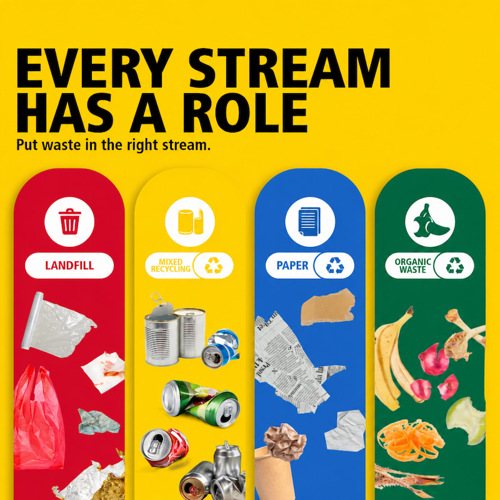
Waste streams should be based on what a facility generates and what its collection service accepts. A multi-stream station can distinguish paper from mixed recycling and general waste, with additional streams where required. Labels must reflect local acceptance rules: not every item that looks recyclable belongs in every recycling service.
Paper: Office paper and other paper products accepted by the site’s contractor.
Mixed recycling: Accepted bottles, cans and packaging, according to local collection rules.
General waste: Materials not accepted in the available recycling streams.
Other dedicated streams: Additional categories only where the site has an appropriate collection service.
Colour-coded lids give an immediate visual cue; labels and signage provide the explanation. A shaped opening can reinforce the intended stream, but it should never replace accurate wording. The combination is more useful than colour alone, particularly for visitors, new staff and people who are unfamiliar with a site’s recycling rules.
Three design choices matter most: visibility, clarity and consistency. Position stations where disposal decisions occur, keep the same stream names and colours across the site, and avoid creating different rules from one floor to another. A well-labelled station should make the next action obvious without requiring users to stop and interpret a complicated poster.
Modular components also allow a facility to adjust its configuration when its needs change. A site may initially need paper, mixed recycling and general waste, then later revise the arrangement after a waste audit or a change in contractor requirements. Rather than making unsupported claims about recycling outcomes, focus on what the system is designed to support: clearer identification and a more consistent disposal experience.
View the broader Slim Jim® bins and recycling stations range
Commercial recycling is not identical in every setting. The materials generated, users of the system and collection routines differ. Slim Jim® Recycling Stations can be considered as part of a tailored approach in the following non-hazardous waste applications:
Offices: Paper, packaging and general waste in shared kitchens, meeting spaces and common areas.
Hospitality: Guest-facing and staff collection points, with streams selected for the venue’s actual materials.
Education: Consistent, clearly labelled stations for shared spaces with many different users.
Healthcare and aged care: Recycling in appropriate non-clinical areas; clinical and hazardous waste require separate approved systems.
Manufacturing: Repeated collection points across operational areas, aligned with site-specific waste streams and servicing routes.
In each case, the best configuration is determined by the waste audit and the collection provider—not simply by the appearance of the bins. This is where modularity matters: the system can be built around the practical requirements of the site.
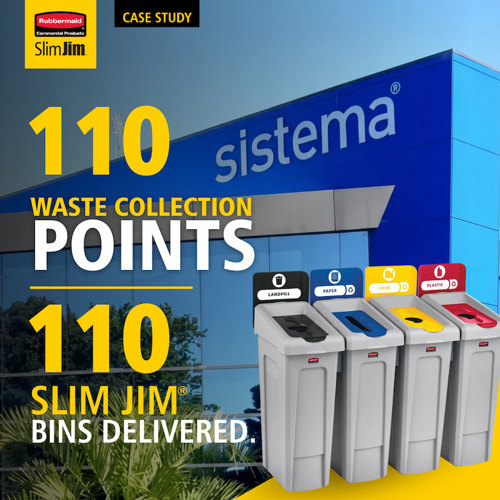
A useful example is Sistema®’s New Zealand manufacturing operation. In the RCP customer story, Slim Jim® Recycling Stations were introduced across the facility to create 110 waste collection points. The emphasis was on giving employees recognisable, accessible places to separate waste during everyday work.
The case illustrates why consistency matters at scale. Colour-coded lids, waste-stream identification and strategically positioned collection points can work together as one recognisable approach rather than a patchwork of unrelated bins. It is an example of infrastructure supporting a broader sustainability program; it should not be read as evidence of a specific recycling-rate improvement unless measured results are available.
Read the full RCP × Sistema® waste management case study
A recycling station is only one part of the process. Staff need to understand the streams, cleaning teams need a workable emptying routine, and the materials collected need to remain separate through to pickup. Review contamination regularly and update signage when collection requirements change. Simple, consistent instructions can be more useful than an elaborate campaign that disappears after a week.
National Recycling Week is a starting point, not the finish line. By choosing streams carefully and making them easy to identify, businesses can create recycling systems that are easier to use throughout the year. Slim Jim® Recycling Stations offer a configurable product platform for that task.
A commercial recycling station is a collection point that separates materials into clearly identified waste streams. It may use multiple containers, colour-coded lids, specific openings and signage to help users select the correct stream.
Slim Jim® Recycling Stations bring compatible containers, lids and waste-stream identification together in a modular system. Facilities choose configurations that reflect their waste streams and collection requirements.
Common configurations include paper, mixed recycling and general waste. The exact streams and accepted materials should always match the site's waste contractor and local recycling rules.
Yes. The modular approach allows facilities to choose waste-stream identification and configurations for different needs. The best setup depends on the materials generated, available space and servicing workflow.
Colour provides a quick visual signal. Used consistently with clear labels and appropriate openings, it can make disposal choices easier to recognise and help users follow the site's sorting system.
Review waste types and volumes, collection-service rules, location, signage, ease of servicing and whether the system can adapt as requirements change.