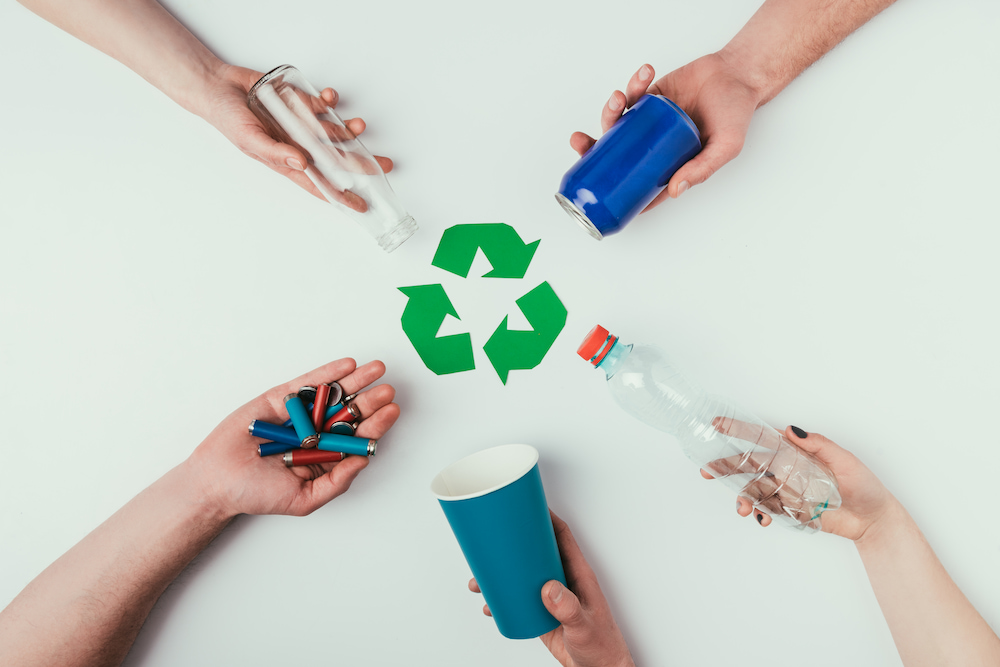
For facilities managers, ESG leads and procurement professionals, the pressure to manage waste responsibly has never been greater. Waste diversion targets are climbing. Scope 3 reporting requirements are tightening. Stakeholders, regulators and customers all expect measurable progress.
The commercial and industrial sectors contribute a significant portion of the total waste generated in Australia. From healthcare to hospitality, the volume continues to grow. A lone recycling bin in a breakroom does not constitute a strategy.
With Global Recycling Day approaching, it is worth examining what effective commercial recycling solutions actually require. They must address the full lifecycle of waste. That means rethinking product design, upgrading front-of-house sorting infrastructure and investing in back-of-house durability.
Global Recycling Day takes place on March 18 each year. Founded by the Global Recycling Foundation, it recognises recycling as the “Seventh Resource” alongside the six primary natural resources: water, air, oil, natural gas, coal and minerals. The initiative calls on governments, businesses and communities worldwide to treat recycling as a resource-conservation issue, not simply a waste-disposal task.
The day also provides a framework for organisations to benchmark their current recycling programs and identify where infrastructure, education or product selection may need improvement. For commercial operations producing significant amounts of waste across multiple streams, such structured evaluation is essential. Effective action on Global Recycling Day starts with understanding where materials are going and whether current systems are recovering the resources they should.
Waste management in commercial spaces has shifted from a background function to a boardroom priority. Increased reporting requirements around environmental impact have made waste diversion a measurable KPI. Businesses across industries now face pressure to demonstrate progress on sustainability targets tied to recycling and resource recovery.
Yet contamination remains one of the biggest challenges in commercial waste collection. When recyclables are mixed with general waste, entire loads are redirected to the landfill. This is particularly crucial in industries that generate high volumes of cardboard, food waste and other recyclables. The problem is compounded by fragmented recycling infrastructure, inconsistent labelling and limited education among building occupants. Colour-coded and clearly labelled bins improve waste separation, but only when paired with regular training and clear signage. Without these measures, valuable resources are lost, and operational budgets take the hit.
Short product lifecycles add another layer of complexity. Products designed without end-of-life recyclability in mind create waste streams that are difficult and costly to manage effectively. Commercial recycling solutions must integrate upstream product design with downstream sorting and collection infrastructure. Innovation in both product engineering and facility systems is the only path to meaningful, sustained waste diversion.
Effective commercial recycling solutions begin before disposal. They begin with product engineering decisions that determine whether an item can be recycled at all.
The CirculAir 90™ passive air care system puts this principle into practice. Unlike conventional air fresheners that rely on batteries and fuel cells, the CirculAir 90™ operates entirely without power. It requires no energy source to function. Instead, it uses natural air movement to circulate fragrance for up to 90 days of maintenance-free performance. The battery-free design eliminates waste from spent batteries and complex multi-material components, while also reducing carbon emissions associated with manufacturing and disposal.
The CirculAir 90™ refill is constructed from a single material, making it straightforward to recycle without dismantling. This mono-material approach reflects circular economy principles, where reducing material complexity at the design stage creates products that fit cleanly into existing recycling streams.
Recyclability has been assessed and verified through APCO’s Packaging Recyclability Evaluation Portal (PREP). An ISO-compliant Lifecycle Assessment (LCA) conducted by South Pole found that CirculAir 90™ delivers reduced environmental impact across all 16 key categories compared to its predecessor, the TCell.
Battery-free, passive operation with zero maintenance for 90+ days
Mono-material refill designed for recyclability without dismantling
Verified recyclable through APCO’s PREP in Australia and New Zealand
92.5 metric tonnes of CO₂ equivalent savings projected annually from the global TCell transition
4.5 metric tonnes of metal and 3 metric tonnes of plastic are eliminated from production each year
Reduced impact across all 16 key environmental categories in ISO-compliant LCA
For facilities committed to sustainable facility management, the CirculAir 90™ demonstrates that commercial recycling solutions can start at the product level. Design for recyclability is not a marketing exercise. It is an operational decision that reduces waste before it reaches the bin.
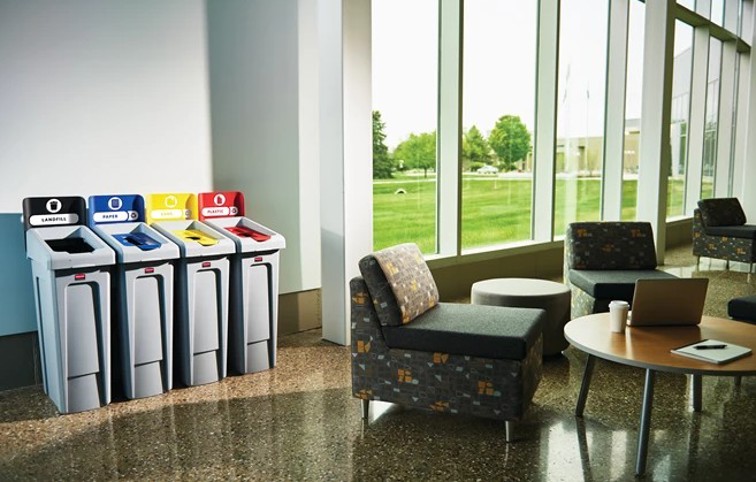
Even well-designed products need the right infrastructure to be recycled correctly. Contamination is the single biggest barrier to effective commercial waste collection. When employees and building occupants are uncertain about where to place materials, recyclables end up in a landfill.
Recycling bins for commercial use play a central role in effective commercial recycling solutions. The Slim Jim® Recycling Stations are engineered to address this challenge directly. Their modular design allows facilities to configure stations for multiple waste streams, including paper, bottles and cans, mixed recycling and general waste. Each station uses colour-coded lid inserts and standardised waste-stream labels, providing users with clear visual cues that reduce contamination rates.
The snap-in connector system links stations without tools or hardware. This makes it simple to scale recycling infrastructure across lobbies, cafeterias, corridors and other high-traffic areas.
Modular, tool-free snap-in connector system for flexible station configurations
Colour-coded lid inserts with 10 standardised waste stream labels
Hinged lid inserts to accommodate larger recycling materials
Bag cinches for quick, knot-free liner changes that improve staff productivity
Venting channels make removing liners up to 80% easier, reducing risk of worker injury
Built to be dragged a distance equal to 20 times the height of the Eiffel Tower without breaking
Clear, well-placed recycling stations create the visibility needed to change behaviour. When waste-stream separation is intuitive, contamination drops and diversion rates rise. The efficiency gains are tangible. That is the difference between a bin and a system.
Durability is often overlooked in conversations about sustainability. Yet a waste container that cracks, warps or needs replacing every year generates its own waste stream. Each replacement cycle incurs costs for materials, procurement, and landfill contributions.
BRUTE® Bins are built to resist exactly that. Guaranteed to never fade, warp, crack, or crush, they are constructed from the highest-quality materials with a proprietary design engineered for extended service life in the toughest commercial settings.
Guaranteed to never fade, warp, crack or crush
Rib-strengthened rims resist crushing under heavy loads
Reinforced bases engineered for dragging over rough surfaces
Contoured base handles improve grip and reduce worker strain for safer handling
Venting channels make liner removal up to 50% easier for more efficient operations
Bag cinches tested to 200,000 cycles for knot-free liner changes
Available in sizes from 10 to 55 gallons across multiple colours, suitable for any commercial setting
For facilities managing large volumes of waste across kitchens, loading docks, outdoor areas and service corridors, BRUTE® Bins deliver the operational reliability that waste diversion systems depend on. Worker safety is supported through ergonomic design. A container that lasts longer means fewer units sent to landfill, lower procurement costs and real money saved over time.
No single product can solve the waste management challenges facing commercial facilities. The most effective commercial recycling solutions operate as coordinated systems that address every stage of the waste lifecycle. This kind of innovation is what separates compliance from genuine impact.
CirculAir 90™ represents the upstream principle: design products for recyclability from the start, reduce material complexity and eliminate unnecessary waste at the source. Slim Jim® Recycling Stations represent the infrastructure layer: clear, accessible, and modular sorting systems that reduce contamination and improve waste-stream separation. BRUTE® Bins represent the durability foundation: heavy-duty, efficient equipment that supports waste diversion over years of demanding use.
Together, these three product lines form an integrated approach to commercial waste management. This systems thinking aligns directly with circular economy goals.
Global Recycling Day is about action. It calls on businesses to move beyond symbolic gestures and invest in the infrastructure, design principles and operational durability that drive real waste diversion.
There is no single perfect solution. Recycling success in commercial environments requires products engineered for their next life. It requires sorting systems that make the right bin obvious. It requires containers built to last through years of heavy use. Systems thinking is what turns individual products into measurable sustainability outcomes.
It is time to rethink how commercial recycling solutions are designed, implemented and sustained. Explore Rubbermaid Commercial Products’ range of commercial recycling solutions to build a waste management system that delivers.