Quick answer: A washroom air freshener for commercial spaces should be judged on six operational criteria: how it's powered, how long each refill lasts, how much space it covers, how consistently it delivers odour control, what happens to the refill at end of life, and whether the supplier can back it with procurement documentation. Get these right and you cut labour, reduce waste and keep washrooms smelling fresh across every site.
Washrooms shape the impression a building leaves. Fragrance does most of the work before visitors notice the fixtures. For facility managers, choosing the right commercial washroom air freshener is less about scent preference and more about how the system performs across a portfolio over 12 months.
Australia's commercial cleaning sector generates more than $12 billion annually. This reflects the significant emphasis businesses place on maintaining high hygiene standards, especially in washrooms.
Washroom hygiene has become a critical focus in most cleaning contracts, highlighting the essential role of effective air fresheners in creating a hygienic environment. Every choice of air freshener dispenser impacts labour hours, waste output, and customer satisfaction. It is a key consideration for facility managers aiming to enhance cleanliness and comfort.
Key takeaways:
Battery-powered auto air fresheners add hidden servicing costs and contribute to a waste stream most facilities don't track.
Refill longevity should map to your existing cleaner routes, not the other way around.
Coverage claims from automatic air fresheners are only useful when measured against your actual room size.
Consistent freshness beats aerosol peaks and dead patches for user experience across high-traffic areas.
Recyclability claims are worth checking against Australian verification systems, not overseas certifications alone.
Every supplier will tell you their range of air fresheners is the best fit. The criteria below give facility managers a clear and simple way to compare options and spot the trade-offs suppliers might not mention. These points apply whether you're choosing for a single workplace or rolling out across multiple locations.
Battery-operated automatic air fresheners add a service load most facilities don't track. Over the course of a year across 40 washrooms, it becomes real money. There's also a waste problem. Only about 3 in every 20 handheld batteries are recycled in Australia each year. The rest go to landfill.
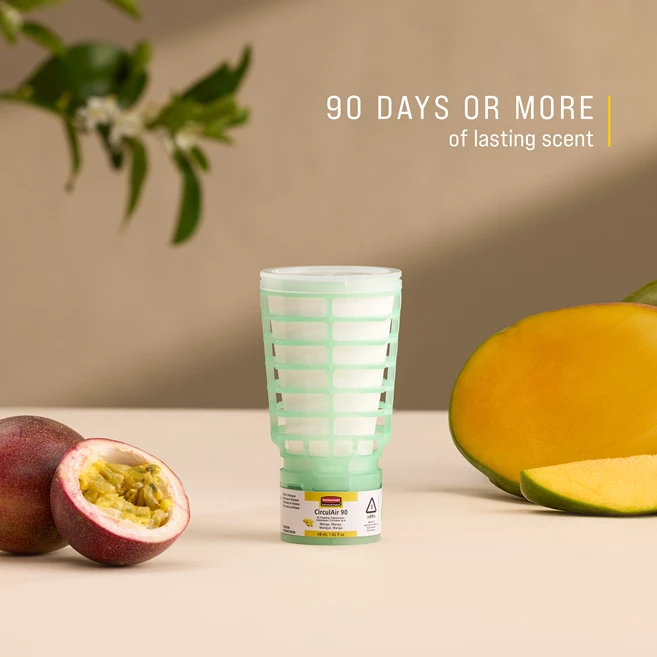
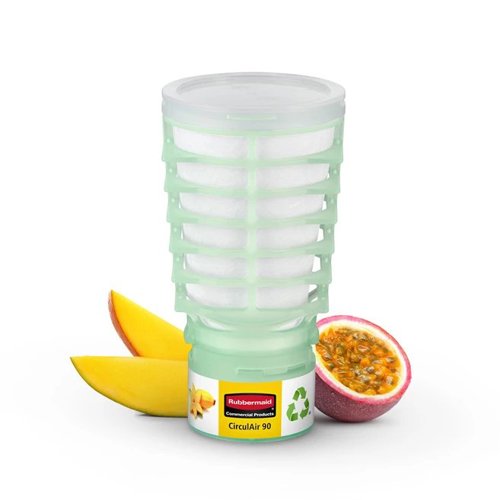
Electric units remove the battery issue but tie you to power access and installation cost. Passive systems sidestep both. Our CirculAir 90™ Passive Air Care runs without batteries or electricity, using natural air movement to release fragrance. That means no charging, no swap schedule and no battery waste to manage across your facilities.
Ask how many days a single refill actually delivers fragrance under normal washroom conditions. Short-life refill options mean more site visits, more van kilometres and more chances for a swap to get missed. That gap shows up as a complaint before it shows up on a report.
Longer refill cycles let cleaning teams plan regular servicing against the same interval as other washroom consumables. CirculAir 90™ refills are engineered for at least 90 days of consistent fragrance output. That works out to roughly four servicing cycles per unit per year.
Coverage claims only matter when they map to your actual space. Under-spec leads to complaints from the far cubicle. Over-spec means you're paying for output you don't use. Ask suppliers for coverage in stalls or cubic footage, not just a vague square-metre figure.
Each CirculAir 90™ dispenser covers mid-size commercial washrooms with 3 to 4 stalls or fixtures, up to approximately 6,000 cubic feet. For larger washrooms in busy offices or hospitality venues, plan for a second unit rather than expecting a single unit to stretch. Matching the dispenser count to the room size keeps the fragrance consistent from the entry through to the back cubicle.
Aerosol dispensers cycle on a timer. That creates scent peaks right after a spray, followed by dead patches until the next one fires. Users notice both. Passive systems release at a steady rate through the full refill cycle. It leaves the space smelling fresh whether it's 8am or 4pm during peak hours.
Air quality matters too. Check whether the refill uses VOC propellants, because many facility policies now flag them. CirculAir 90™ refills are formulated without VOC propellants and deliver consistent odour control from day one through to day 90.
Fragrances span families such as citrus, floral, fruity, and fougere, so you can match scent to the environment without compromising indoor air quality. That supports a hygienic, more welcoming environment for visitors and users alike. It does so without masking odours behind heavy chemical sprays.
Think about what happens to the refill after it's finished. Multi-material refills that need dismantling almost never get recycled in practice. Cleaners bin them because pulling apart a cartridge is not a realistic ask during a scheduled clean.
Check for verification against Australian recycling systems rather than overseas certifications alone. CirculAir 90™ refills are made from a single, commonly recyclable material and require no disassembly for recycling. Recyclability has been assessed and verified through APCO's Packaging Recyclability Evaluation Portal (PREP) for Australia and New Zealand. An ISO-compliant Life Cycle Assessment also found that the refill produces 11% fewer greenhouse gas emissions and uses 36% fewer metal and mineral resources than the previous TCell™ refill.
The last criterion is the one most articles skip. Your procurement team needs paperwork. Safety Data Sheets, recyclability verification, LCA data and warranty terms all get requested at contract stage or during audits. Missing documentation slows contracts and creates compliance gaps that are hard to close later.
Every CirculAir 90™ fragrance ships with a current Safety Data Sheet, and recyclability and LCA data are available on request. That gives facility managers a reliable paper trail for site compliance files without chasing suppliers weeks after the order.
The right commercial washroom air freshener is the one that meets these six criteria without you having to think about it every quarter. Choose Rubbermaid Commercial Products for reliable, cost-effective air freshener solutions. Elevate your commercial washroom experience today!
Servicing frequency depends on the refill life. Aerosol and gel systems often need swaps every 30 to 60 days, while passive systems can run for 90 days or longer. Match the servicing interval to your existing cleaner routes to avoid dedicated air care visits.
Yes, when the system is designed for it. Passive air fresheners use natural air movement to release fragrance at a steady rate. Battery-powered units rely on programmed sprays that peak and drop off between cycles, which many users find less consistent.
Coverage varies by system, but a mid-size commercial washroom with 3 to 4 stalls or fixtures typically requires one dispenser rated at around 6,000 cubic feet. Larger washrooms or high-traffic areas often need a second unit to maintain even fragrance.
They can. Aerosol refills with VOC propellants add compounds to the air users breathe, which some facility policies now restrict. Passive systems without propellants avoid this issue while still delivering consistent freshness.
Some can, but only if the refill is made from a single material and needs no disassembly. Look for recyclability verified through APCO's Packaging Recyclability Evaluation Portal (PREP), which assesses packaging against Australian and New Zealand recycling systems.